02 / 02 / 2022
Ch-16 OUR MINERAL WEALTH
Non-metallic minerals
Coal, mineral oil and natural gas are mineral fuels. Some other useful non-metallic minerals are salt, gravel, etc.
1. Coal
It is the most commonly used fuel. It is also known as ‘black diamond’. It is used for cooking food, producing electricity, heating homes, driving railway engines and for running factories.
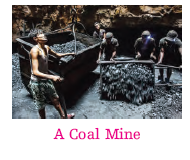 Important coal mines are in Raniganj, Jharia, Bokaro, Karampura and Korba.
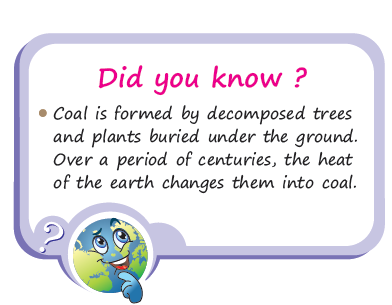 Many chemicals produced from coal are used in making drugs, plastics, fertilizers and cosmetics.
2. Mineral Oil
It is also called the crude oil or liquid gold. This is found deep under the surface of the earth. It is formed from the remains of the ancient land and sea creatures.
The main products that we get from crude oil are petrol, diesel, kerosene and cooking gas. Oil wells are drilled for pumping out the crude oil. Most of the oilfields are in Digboi and Naharkatiya in Assam and Ankleshwar and Kalol in Gujarat.
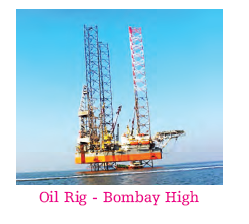 A big oilfield has been recently found under the seabed off the coast of Mumbai. It is called the Bombay High. The crude oil is sent to the refineries through pipelines.
Save Petrol. Every Drop is Precious. “Petrol Saved is Petrol Produced”.
Mineral oil is used for dry cleaning. It provides lubricating oil, printing ink and vaseline. It also provides paraffin wax used to make candles and shoe-polish.
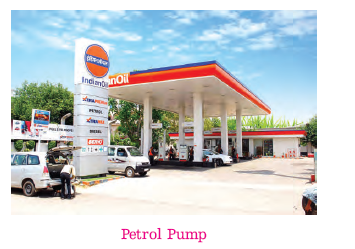 The largest reserves of petroleum oil in the world are found in the countries like Iraq and Saudi Arabia. These countries are the largest suppliers of petroleum oil in the world.
3. Natural Gas
Most of these oil wells have some natural gas which is used for generating power, running factories and cooking food. Natural Gas reserves are located along the Coast of Odisha, Andhra Pradesh and Tamil Nadu. Compressed Natural Gas (CNG) is nowadays used as a fuel. In Delhi, the buses and three- wheelers use CNG.Mineral deposits are limited and cannot last forever. They cannot be made by man. Therefore, we must use them carefully.

1. Coal
It is the most commonly used fuel. It is also known as ‘black diamond’. It is used for cooking food, producing electricity, heating homes, driving railway engines and for running factories.
2. Mineral Oil
It is also called the crude oil or liquid gold. This is found deep under the surface of the earth. It is formed from the remains of the ancient land and sea creatures.
The main products that we get from crude oil are petrol, diesel, kerosene and cooking gas. Oil wells are drilled for pumping out the crude oil. Most of the oilfields are in Digboi and Naharkatiya in Assam and Ankleshwar and Kalol in Gujarat.
Save Petrol. Every Drop is Precious. “Petrol Saved is Petrol Produced”.
Mineral oil is used for dry cleaning. It provides lubricating oil, printing ink and vaseline. It also provides paraffin wax used to make candles and shoe-polish.
3. Natural Gas
Most of these oil wells have some natural gas which is used for generating power, running factories and cooking food. Natural Gas reserves are located along the Coast of Odisha, Andhra Pradesh and Tamil Nadu. Compressed Natural Gas (CNG) is nowadays used as a fuel. In Delhi, the buses and three- wheelers use CNG.Mineral deposits are limited and cannot last forever. They cannot be made by man. Therefore, we must use them carefully.
Assignments:-
Read Chapter-16 (Page- 99- 100)
Read Chapter-16 (Page- 99- 100)
01 / 02 / 2022
Ch-16 OUR MINERAL WEALTH
Introduction
Minerals are the natural resources found deep inside the earth. They were formed by the forces of nature, millions of years ago. They are not manmade. This underground wealth consists of various minerals like coal, iron, copper, mica, gold, silver and mineral oil.
The place from where a mineral is extracted or taken out is called a mine.
Think what would happen if there was no coal, no iron, no kerosene and no petrol ?
Minerals are generally found mixed with rocks. A rock containing a large quantity of mineral is called the mineral ore. The mineral ore is mined through a shaft or a deep hole dug deep inside the earth to bring out the mineral.
The place from where a mineral is extracted or taken out is called a mine.
Think what would happen if there was no coal, no iron, no kerosene and no petrol ?
Minerals are generally found mixed with rocks. A rock containing a large quantity of mineral is called the mineral ore. The mineral ore is mined through a shaft or a deep hole dug deep inside the earth to bring out the mineral.
Minerals are of two types:
1. Metallic minerals
2. Non-metallic minerals
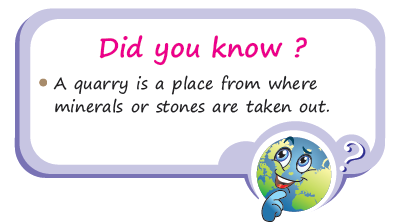
Metallic minerals
Sometimes, rocks have minerals from which useful metals are extracted. Minerals from which metals can be extracted are called ores. Some important metals extracted from metallic minerals are iron, aluminium, copper, gold, silver, platinum, nickel and zinc. These are used to make machines, utensils, cars and aeroplanes. Aluminium and copper are used in electrical wires. Copper ore is found in Rajasthan and Jharkhand. Minerals are used to make the following :
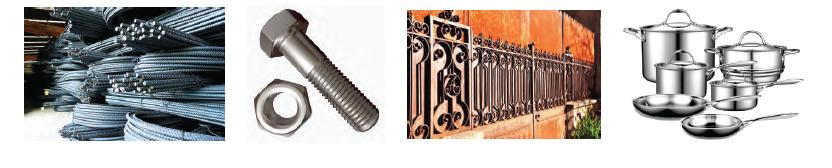 1. Iron Ore
Iron ore is the most important mineral. It is hard and durable. Iron is used for making utensils and tools. It is also used for construction of buildings, bridges, engines, railway coaches and other means of transport. India has about 1/4th of the world’s iron ore deposits. It is found in the Singhbhum in Jharkhand, Bihar, Orissa, West Bengal, Madhya Pradesh, Andhra Pradesh, Karnataka and Goa.
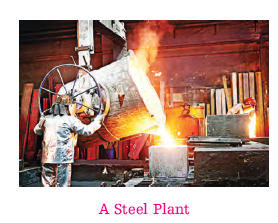 India has many steel plants to produce iron and steel from iron ore. The iron and steel plants are located at Jamshedpur, Bhilai, Rourkela, Bokaro, Durgapur, Bhadravati, etc.
2. Bauxite
This ore is used to produce aluminium. Aluminium is widely used in making electric wires, utensils and many other industrial products. Bauxite is mainly found in Rajasthan and Bihar.
3. Mica
It is used mainly to make electrical goods. India is the world’s largest producer of mica. It is found in Rajasthan, Bihar and Andhra Pradesh.
4. Manganese
India has large deposits of manganese. Odisha and Madhya Pradesh are the leading manganese producing states. It is used in chemicals, steel and glass industries.
5. Gold
Gold is a valuable metal. Most of our gold comes from the Kolar Gold Fields in Karnataka. The Hutti Gold Fields in Raichur, Karnataka and the Ramagiri Gold Fields in Anantpur district of Andhra Pradesh are other important gold mines of India.
Iron ore is the most important mineral. It is hard and durable. Iron is used for making utensils and tools. It is also used for construction of buildings, bridges, engines, railway coaches and other means of transport. India has about 1/4th of the world’s iron ore deposits. It is found in the Singhbhum in Jharkhand, Bihar, Orissa, West Bengal, Madhya Pradesh, Andhra Pradesh, Karnataka and Goa.
2. Bauxite
This ore is used to produce aluminium. Aluminium is widely used in making electric wires, utensils and many other industrial products. Bauxite is mainly found in Rajasthan and Bihar.
3. Mica
It is used mainly to make electrical goods. India is the world’s largest producer of mica. It is found in Rajasthan, Bihar and Andhra Pradesh.
4. Manganese
India has large deposits of manganese. Odisha and Madhya Pradesh are the leading manganese producing states. It is used in chemicals, steel and glass industries.
5. Gold
Gold is a valuable metal. Most of our gold comes from the Kolar Gold Fields in Karnataka. The Hutti Gold Fields in Raichur, Karnataka and the Ramagiri Gold Fields in Anantpur district of Andhra Pradesh are other important gold mines of India.
Assignments:-
Read Chapter-16 (Page-97-98)
Read Chapter-16 (Page-97-98)
25 / 01 / 2022
Ch- 21 MEANS OF COMMUNICATION
Assignments:- Do Page-134&135
DO EX- A, B & C IN YOUR S.ST OCBs.

19 / 01 / 2022
Ch- 21 MEANS OF COMMUNICATION
Internet
The latest means of communication is the Internet. It is communication through computers. It is a vast international network of computers joined together with telephone lines. It gives access to information all over the world.

Radio and Television
Among the means of mass communication, the radio and the television are very important. There are over 180 TV stations all over the country. They provide programmes on news, information, music, education and entertainment to the people. We can see films, watch international events like the Olympic games, cricket matches, space travel, etc. while sitting at home.
 Many people in our country cannot read or write. The television is very useful for them. It is the most effective means of mass communication in bringing the people of the world closer to each other.
Newspapers, Magazines and Books
They contain news, information and pictures for the people, who know how to read. They bring news from India and across the whole world every morning.
Satellites Communication
Communication all over the world has become easier and faster with the help of communication satellites. Infact they regulate the use of other means of communication e.g. mobile phones. These satellites float high above the earth. They receive and send sound signals and pictures to every part of the world.
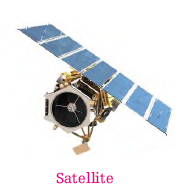 These satellites have made it possible for us to see live cricket matches and programmes held anywhere in the world. They are used for forcasting weather or monitoring natural disasters etc.
Social Networking Sites
The latest development in communication are the social networking sites like Facebook, Twitter, and Google Plus. These sites help people communicate, chat, send or recieve pictures or videos to and from a large number of people. Social networking is growing at a very fast pace.

Assignments:-
Read Chapter-21 (Page-133-134)
Read Chapter-21 (Page-133-134)
18 / 01 / 2022
Ch- 21 MEANS OF COMMUNICATION
Introduction
Communication means keeping in touch with other people and knowing what is happening in our country, and in the whole world.
There are several means of communication available to us now. We communicate by writing letters, e-mails, sending telegrams or fax and speaking on telephone.
By watching television, listening to the radio, reading newspapers and magazines, we keep ourselves informed about what is happening in our town, city, country or in the world.
A vast communication network connects various parts of our country.
There are several means of communication available to us now. We communicate by writing letters, e-mails, sending telegrams or fax and speaking on telephone.
By watching television, listening to the radio, reading newspapers and magazines, we keep ourselves informed about what is happening in our town, city, country or in the world.
A vast communication network connects various parts of our country.
Post office
The Post and Telegraph Department of our Government takes care of our letters, parcels and money orders. We can buy postage stamps, postcards, inland letters and envelopes at a post office.
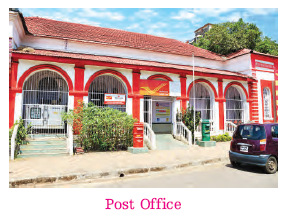 Letters are carried by trains or aeroplanes and take a few days to reach their destinations. These days big cities have special letter boxes marked QMS or Quick Mail Service. Letters posted by the QMS reach much faster. The PIN CODE number should be written clearly in the address, as it ensures the faster delivery of letters.
The Postal Department has introduced a postal service, called the Speedpost, by which letters are delivered in one or two days. Private courier services are also becoming very popular these days. Urgent messages can be sent by fax or e-mails.
 We can also send money through the post office by filling aform, called the ‘Money Order’ form.
The Postal Department has introduced a postal service, called the Speedpost, by which letters are delivered in one or two days. Private courier services are also becoming very popular these days. Urgent messages can be sent by fax or e-mails.
Telephone
Telephone is the fastest, cheapest and most convenient means of communication. Telephone facilities are now available in cities, towns and big villages. We can talk to people in other cities or countries through the Subscriber Trunk Dialling (STD) or the International Subscriber Dialling (ISD).

Mobile phones
Mobile phones have revolutionized the way we communicate. Cellular phones or mobile phones have become extremely popular these days because they can be carried anywhere in a pocket or a purse.
 While letters are a one-way comunication, telephones provide us with a two-way communication.
 Smart phone available today is a multi-use device having additional functions of portable media-player, digital camera, video camera and GPS navigation system. It also has touch screen and a web browser.
Fax
By means of fax, handwritten or printed materials can be transmitted in its original form from one place to another.

E-mail
Through E-mail, we send and receive messages by computers. It is a mode of transmission of computerised data or messages. It has revolutionised the world of communication. People across the world can share information through the E-mail or the Electronic mail.
Assignments:-
Read Chapter-21 (Page-131-132)
Read Chapter-21 (Page-131-132)
12 / 01 / 2022
Ch- 26 OUR GOVERNMENT
Assignments:- Do Page-164&165
A. Tick (√) the correct answer in your S.st OCBs:-
1. The minimum age to cast vote in the elections :
a. 21 years b. 25 years c.18 years
2. The number of fundamental rights in our constitution:
a. Five b. Six c. Seven
3. The minimum age to contest an election:
a. 21 years b. 25 years c. 28 years
4. The President of India is elected for:
a. 5 years b. 6 years c.7 years
5. The Lok Sabha has about:
a. 542 members b. 600 members c.545 members
Do Exercise B and C in your SST notebook.

11 / 01 / 2022
Ch- 26 OUR GOVERNMENT

Introduction
Our country is very vast. It consists of 28 States and 8 Union Territories. Delhi is called the National Capital Territory (NCT). These States and Union Territories together form the Indian Union. We need a government to make and execute laws, and to punish those, who break them.
We have two levels of Government:
1. The Government at the centre is called the Union or the Central Government.
2. The Government at the state level is called the State Government.
These Governments are formed through elections. Every five years, there are general elections all over the country. All those citizens who are 18 years of age and above have the right to vote. Candidates of different political parties contest these elections. People vote for the candidate of their own choice.
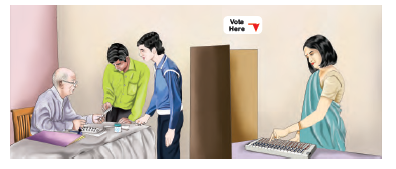
We have two levels of Government:
1. The Government at the centre is called the Union or the Central Government.
2. The Government at the state level is called the State Government.
These Governments are formed through elections. Every five years, there are general elections all over the country. All those citizens who are 18 years of age and above have the right to vote. Candidates of different political parties contest these elections. People vote for the candidate of their own choice.
Union Government
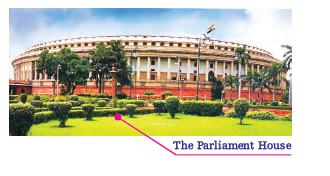
The Indian Parliament makes laws for the whole country. The President of India, the Lok Sabha and the Rajya Sabha form the Parliament of our country.
Both men and women of 25 years and above can contest the elections. The candidate, who gets the maximum number of votes is declared elected and becomes a member of the Lok Sabha. The Lok Sabha has about 545 members.
The members of the Rajya Sabha are elected by the state legislatures. The members of both the Houses of Parliament are called the Members of Parliament or the MPs.
The President of India is elected by the elected members of the Lok Sabha, the Rajya Sabha and the State Legislative Assemblies. He is the Head of the State of the entire country. He is elected for a period of five years.
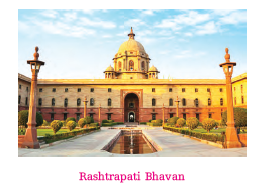
The leader of the party which gets the maximum number of seats in the Lok Sabha is appointed by the President as the Prime Minister. On the advice of the Prime Minister, he appoints the other Council of Ministers. The Prime Minister together with other ministers, forms the Council of Ministers to run the Government.
The Union Government functions from New Delhi, the Capital of India.
The office of the Prime Minister of India is in the Central Secretariat. It is located near the Rashtrapati Bhavan.
Both men and women of 25 years and above can contest the elections. The candidate, who gets the maximum number of votes is declared elected and becomes a member of the Lok Sabha. The Lok Sabha has about 545 members.
The members of the Rajya Sabha are elected by the state legislatures. The members of both the Houses of Parliament are called the Members of Parliament or the MPs.
The President of India is elected by the elected members of the Lok Sabha, the Rajya Sabha and the State Legislative Assemblies. He is the Head of the State of the entire country. He is elected for a period of five years.
The leader of the party which gets the maximum number of seats in the Lok Sabha is appointed by the President as the Prime Minister. On the advice of the Prime Minister, he appoints the other Council of Ministers. The Prime Minister together with other ministers, forms the Council of Ministers to run the Government.
The Union Government functions from New Delhi, the Capital of India.
The office of the Prime Minister of India is in the Central Secretariat. It is located near the Rashtrapati Bhavan.
State Government
The Government at the State level is made up of -
(a) the Governor,
(b) the Chief Minister and
(c) the State Council of Ministers.
The Governor is the highest authority of the State Government. He is appointed by the President of India. He is also called the head of the state or province.
The Governor appoints the leader of the majority party of the State Legislative Assembly, called the Vidhan Sabha, as the Chief Minister. On the advice of the Chief Minister, the Governor appoints the other ministers who form the Council of Ministers. The State Governments function from their respective state capitals.
(a) the Governor,
(b) the Chief Minister and
(c) the State Council of Ministers.
The Governor is the highest authority of the State Government. He is appointed by the President of India. He is also called the head of the state or province.
The Governor appoints the leader of the majority party of the State Legislative Assembly, called the Vidhan Sabha, as the Chief Minister. On the advice of the Chief Minister, the Governor appoints the other ministers who form the Council of Ministers. The State Governments function from their respective state capitals.
Judiciary
The Supreme Court is the highest court in India. It is situated in New Delhi. The Chief Justice of Supreme Court is appointed by the President on the advice of the Prime Minister. Other Judges of Supreme Court are also appointed by the President.
The highest court in the state is the High Court. There are district courts at the district level.
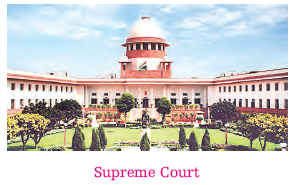
The highest court in the state is the High Court. There are district courts at the district level.
Assignments:-
Read Chapter-26 (Page-162-164)
Read Chapter-26 (Page-162-164)
******************************************
22 / 12 / 2021
Ch- 23 Thoughts that make us Better Human Beings.
Assignments:- Do Page-148&149
A. Tick(√) the correct answer in your S.st OCBs:-
1. Who was the founder of Jainism?
a. Lord Buddha [ ] b. Lord Mahavira [ ] c. None of these [ ]
2. The founder of the Sikh religion was :
a. Guru Nanak Dev [ ] b. Jesus Christ [ ] c. None of these [ ]
3. The holy book of the Christians is the :
a. Bible [ ] b.Gita [ ] c. Guru Granth Sahib [ ]
4. Zoroastrianism was founded by :
a. Zoroaster [ ] b. Jesus Christ [ ] c. Lord Mahavira [ ]
B. Fill in the blanks in your S.st OCBs:-
1. India is a land of many ............
2. Buddhism and Jainism preach ..........
3. .......... is the holy book of the Muslims.
4. ........... is the holy book of the Parsis.
5. The Parsis worship in the .......... temples.
C. Write 'T ' for True and 'F' for False in your S.st OCBs:-
1. Lord Mahavira was the founder of Buddhism. [ ]
2. Lord Buddha was the founder of Jainism. [ ]
3. Guru Nanak Dev was the founder of the Sikh religion. [ ]
4. Jesus Christ was the founder of Christianity. [ ]
5. Prophet Muhammad was the founder of Islam. [ ]
D. Answer the following questions in your S.st notebook:-
Write the name or names of :
1. Two great epics of the Hindus
(i) .......... (ii) ..........
2. Two well-known Hindu saints
(i) .......... (ii) ..........
3. The founder of Jainism
..........
4. The founder of Buddhism
..........
5. The place where Prophet Muhammad was born
..........
6. The founder of the Sikh religion
..........
7. The holy book of the Sikhs
..........
08 / 12 / 2021
Ch- 23 Thoughts that make us Better Human Beings.
GURU NANAK DEV
Guru Nanak Dev was the founder of the Sikh religion. He was born in Punjab about 500 years ago. The Sikhs are the followers of Guru Nanak and all other Gurus, who came after him. Guru Gobind Singh was their tenth Guru. The holy book of the Sikhs is the “Sri Guru Granth Sahib”.

Guru Nanak taught the people to live in peace. He accepted and combined the good teachings of Hinduism and Islam.
JESUS CHRIST
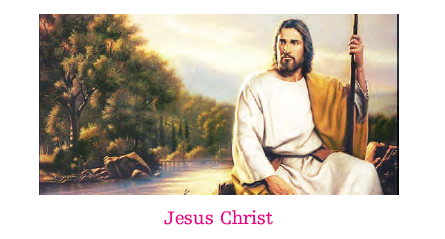
Jesus Christ, the founder of Christianity, was born in Bethlehem, nearly 2,000 years ago. His followers are called the Christians. They believe that Jesus Christ was sent to the earth to spread the message of God. The Christians pray in a church. Their holy book is called the “Bible”. Jesus taught the importance of peace, love and compassion. He believed that even enemies can be won over by love. Christmas, the birthday of Jesus Christ, is the most important festival of the Christians. His followers have spread his teachings in many parts of the world.
 PROPHET ZOROASTER
A large number of Parsis also live in India. They follow Zoroastrianism. This religion was founded by the great Persian prophet, Zoroaster, about 2,500 years ago.
A large number of Parsis also live in India. They follow Zoroastrianism. This religion was founded by the great Persian prophet, Zoroaster, about 2,500 years ago.
Zoroaster preached that there is a continuous battle going on between the forces of good and evil. This battle can be won only by good actions. When the good wins over the evil, there is peace and happiness. The Parsis worship in fire temples. The teachings of Zoroaster have been collected in a book, called the ‘Zend Avesta’.
Assignments:-
Read Chapter-23 (Page-147)
Read Chapter-23 (Page-147)
07 / 12 / 2021
Ch- 23 Thoughts that make us Better Human Beings.
INTRODUCTION
India is a land of many religions. Indians are free to follow and preach the religion of their choice. Many religions such as Hinduism, Jainism, Buddhism and Sikhism have originated in India.
 HINDUISM
Hinduism is the oldest religion in the world. The Hindus worship God in many different forms but they believe in one Supreme God. The holy books and scriptures of Hinduism include the Vedas, the Puranas and the Epics like the Ramayana and the Mahabharata. They were written long, long ago. There have been many well-known Hindu saints like Adi Shankara, Dayanand Saraswati and Swami Vivekananda. They all have tried to teach us how to be better human beings.
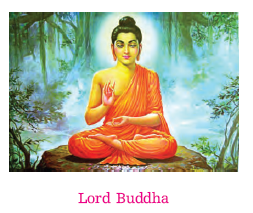
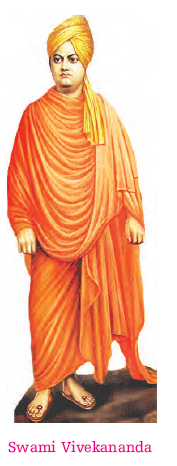 About 2,500 years ago, two religions, Jainism and Buddhism, originated and became popular in India. Lord Mahavira, the founder of Jainism, and Lord Buddha, the founder of Buddhism, were pained to see the ills of our society. They preached non-violence, and told people to lead a simple life.
They did not believe in the growing rituals of the Hindu society. They fought against the evils of caste system and preached that all human beings are equal. Mahatma Gandhi too learnt Ahimsa from their teachings.
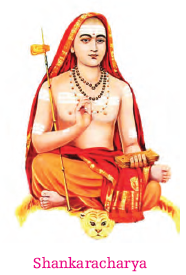
Hinduism is the oldest religion in the world. The Hindus worship God in many different forms but they believe in one Supreme God. The holy books and scriptures of Hinduism include the Vedas, the Puranas and the Epics like the Ramayana and the Mahabharata. They were written long, long ago. There have been many well-known Hindu saints like Adi Shankara, Dayanand Saraswati and Swami Vivekananda. They all have tried to teach us how to be better human beings.
They did not believe in the growing rituals of the Hindu society. They fought against the evils of caste system and preached that all human beings are equal. Mahatma Gandhi too learnt Ahimsa from their teachings.
PROPHET MUHAMMAD
Prophet Muhammad was born in Mecca in about 570 A.D. He is known as the Prophet, the messenger of God, and his followers are called the Muslims.
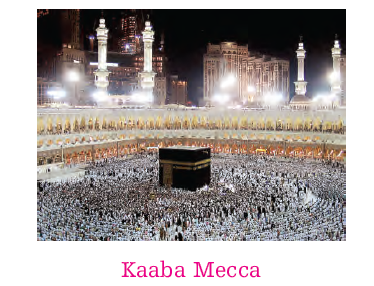 He taught people to live in peace and brotherhood. His teachings are written in the “Koran” – the holy book of the Muslims. The followers of Islam do not have idols or pictures of God. They worship in mosques. They believe that there is only one God – Allah.
Assignments:-
Read Chapter-23 (Page-146&147)
Read Chapter-23 (Page-146&147)
01 / 12 / 2021
Ch- 22 OUR RICH HERITAGE
REVISION
Assignments:-
LEARN AND WRITE ALL THE EXERCISES IN YOUR S.ST OCBs.
A. Tick(√) the correct answer in your S.st OCBs:-
1. The Constitution of India recognizes :
a. 22 languages [ ] b. 31 languages [ ] c. 28 languages [ ]
2. Ustad Bismillah Khan is associated with the instrument :
a. Sarod [ ] b. Shehnai [ ] c. Tabla [ ]
3. Pongal is a .....festival:
a. Harvest [ ] b. National [ ] c. Religious [ ]
4. Khajuraho temples are in:
a. Madhya Pradesh [ ] b. Konark [ ] c .Ellora[ ]
B. Write 'T' for true and 'F' for False in your S.st OCBs:-
1. Men in Bihar wear Phiran.
2. Ghoomar is the form of classical music.
3. The Stupas of Sanchi and Sarnath were built by Emperor Ashoka.
4. Gandhi Jayanti is a religious festival.
5. Bihu is the popular folk dance of Assam.
C. Name any two of the following in your S.st OCBs:-
1. Classical Dances ............. , .............
2. Folk Dances ............. , .............
3. Famous temples in Delhi. ............. , .............
4. National Festivals ............. , .............
5. Types of Classical Music ............. , .............
6. Harvest Festivals ............. , .............
D. Answer the following questions in your S.st notebook:-
1. List the languages recognized by the Constitution of India.
2. What are folk dances? When are they performed?
3. Which are the oldest Indian languages?
4. What type of paintings became popular in the Mughal period?
5. Name any five religious festivals.
30 / 11 / 2021
REVISION
Ch- 15 OUR WATER RESOURCES
Assignments:-
LEARN AND WRITE ALL THE EXERCISES IN YOUR S.ST OCBs.
A. Tick(√) the correct answer
1. The Bhakra Nangal Dam is built on :
a. Beas b. Sutlej c. Mahanadi
2. The highest dam in India is :
a. Bhakra Nangal Dam b. Hirakud Dam c. Tehri Dam
3. The longest dam in the world is:
a. Hirakud Dam b. Tungabhadra Dam c. Tehri Dam
4. Electricity generated from water is called:
a. Thermal Power b. Hydroelectricity c. Solar power
5. Nagarjuna Sagar dam is built on the river:
a. Krishna b. Kaveri c. Yamuna
B. Answer the following questions
1. What are the three main means of irrigation?
2. Name the states irrigated by canals.
3. Why do the farmers in Tamil Nadu, Karnataka and Andhra Pradesh depend on tanks to irri gate their fields ?
4. What are dams?
5. How are dams useful to us?
6. How can we conserve water?
C. Name the following
1. The highest dam in India:_____.
2. The longest dam in the world:_____.
3. The biggest man-made lake in India:_____.
4. The common means of irrigation in South India:_____.
5. Electricity produced from water:_____.
D. Match the following columns
1. Bhakra Nangal dam a. Mahanadi river
2. Hirakud dam b. Krishna river
3. Nagarjuna Sagar dam c. Tungabhadra river
4. Tungabhadra dam d. Sutlej river
E. Fill in the blanks
1. Dams are ______ made of concrete and steel.
2. Dams provide _____ for irrigation.
3. Dams help to produce _____.
4. Dams act as _____.
5. Dams control _____.
F. Name five dams of India:-
_____ _____ _____ _____ _____
24 / 11 / 2021
REVISION
Ch- 8 LIFE OF PEOPLE IN THE PLATEAU REGION
Assignments:-
LEARN AND WRITE ALL THE EXERCISES IN YOUR S.ST OCBs.
A. Tick (√) the correct answer
1. Lavani is a famous :
a. Dress b. Dance c. Musical form
2. Telugu is mostly spoken in:
a. Karnataka b. Tamil Nadu c. Andhra Pradesh
3. The capital of Madhya Pradesh is :
a. Bhopal b. Chennai c. Raipur
4. Yakashgana is the famous traditional theatre of :
a. Andhra Pradesh b. Karnataka c. Chhattisgarh
5. Nagpur is famous for its :
a. Mangoes b. Oranges c. Bananas
B. Fill in the blanks
1. In Karnataka, mulberry trees are grown to rear ________.
2. Tea is grown in the hill slopes of ________ hills.
3. The artisans of Andhra Pradesh are known for their ________ art .
4. ________ is the special snack of the people of Maharashtra.
5. The main festival of Maharashtra is ________.
6. ________ is the main festival of Tamil Nadu.
C. Write 'T' for true and 'F' for false
1. Madhya Pradesh is in the north of India.
2. Bhimbetka is famous for cave paintings.
3. Raipur is the capital of Karnataka.
4. Alphanso mangoes of Maharashtra are very famous.
5. Karnataka has rocky and uneven surfaces.
D. Answer the following questions
1. Name the states that form the Plateau Region of India.
2. What do people like to eat in Tamil Nadu ?
3. Why is Mumbai called an industrial centre?
4. What are the industries that are located in Karnataka?
5. Where are Ajanta and Ellora caves ?
6. What are the famous things in Andhra Pradesh?
7. Name the main festivals of Maharashtra, Tamil Nadu and Karnataka.
E. Write the names of places which is famous for.
1. Kanjeevaram sarees. __________.
2. Bidri art. __________.
3. Dosa, idli, sambhar, Upma and coconut chutney. __________.
4. Pearls and semi precious stones. __________.
5. Carnatic music. __________.
23 / 11 / 2021
Ch- 25 OUR GOALS, RIGHTS AND DUTIES
Assignments:- Do Page-160
A. Answer the following questions in your S.st notebook:-
1. What is a Constitution?
2. Define Democracy .
3. Name three important national goals provided in our Constitution.
4. What are Fundamental Rights?
5. Make a list of the Fundamental Rights.
6. What is meant by Socialism.
B. Write 'T' for true and 'F' for False in your S.st OCBs:-
1. Democracy is the form of government elected by the people.
2. The minimum age of voting is 21.
3. People in India do not have the right to preserve their culture and educational institutions.
4. There are 10 Fundamental rights mentioned in our Constitution.
5. Constitution means right to vote.
C. Fill in the blanks in your S.st OCBs:-
1. All the people living in India will have _______ rights.
2. People above _______ years of age can vote.
3. The Constitution lays down _______ important national goals.
17 / 11 / 2021
Ch- 25 OUR GOALS, RIGHTS AND DUTIES
OUR NATIONAL GOALS
Every independent country has a constitution.
Our Constitution lays down three important national goals. These are:
1. Democracy
2. Socialism
3. Secularism
A constitution is a set of rules according to which a Government runs.
1. Democracy
It is a type of government which is elected by the people. All men and women above 18 years of age have the right to vote in the elections. The elected people form the government and make laws for the welfare of the people and the state as a whole.
2. Socialism
It means that all the people living in India will have equal rights. No difference will be made between the rich and the poor. Equal opportunities will be given to all the people.
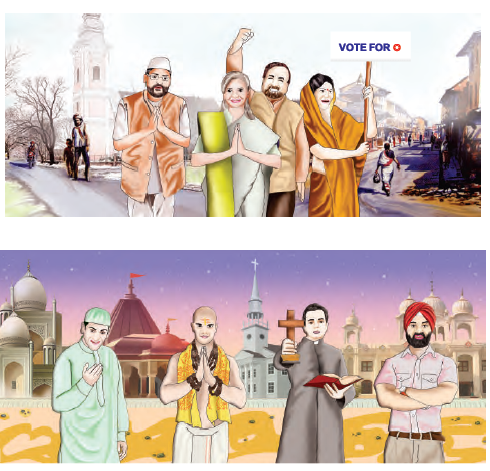 3. Secularism
It means that all the Indians are free to follow any religion of their own choice. Our Government will treat people of all religions alike. There are schools and colleges run by different religious groups. There is no discrimination on the basis of religion in any field.
Our Constitution lays down three important national goals. These are:
1. Democracy
2. Socialism
3. Secularism
A constitution is a set of rules according to which a Government runs.
1. Democracy
It is a type of government which is elected by the people. All men and women above 18 years of age have the right to vote in the elections. The elected people form the government and make laws for the welfare of the people and the state as a whole.
2. Socialism
It means that all the people living in India will have equal rights. No difference will be made between the rich and the poor. Equal opportunities will be given to all the people.
It means that all the Indians are free to follow any religion of their own choice. Our Government will treat people of all religions alike. There are schools and colleges run by different religious groups. There is no discrimination on the basis of religion in any field.
Now, watch this video:-
FUNDAMENTAL RIGHTS AND DUTIES
To help our people live a better life, our Constitution provides certain rights to every citizen. Nobody can ignore these rights. These rights are called the Fundamental Rights.
The Six Fundamental Rights mentioned in our Constitution are :
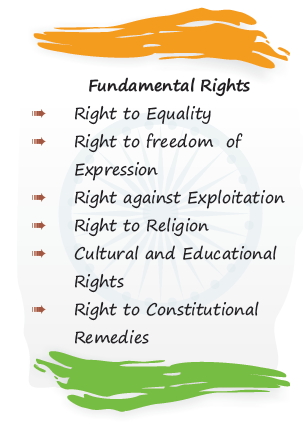
The Six Fundamental Rights mentioned in our Constitution are :
Now, watch this video:-
OUR FUNDAMENTAL DUTIES
There is a close relationship between rights and duties. We must do our duty in order to enjoy our rights. Some of the Fundamental Duties mentioned in our Constitution are :
1. We must obey the laws of the country.
2. We must respect our National Flag and National Anthem.
3. We must pay our taxes.
4. We must protect the unity and oneness of our country.
5. We must protect public property like roads, railways, bridges, historical buildings, etc.
The Constitution also lays down some guidelines for the Government so that it can function in a better way for the welfare of the people. These are called the Directive Principles or the Directive Principles of State Policy.
- Some salient Directive Principles are :
1. Free and compulsory education for all children up to the age of 14 years.
2. To provide work to all men and women.
3. Equal wages for equal work for both men and women.
1. We must obey the laws of the country.
2. We must respect our National Flag and National Anthem.
3. We must pay our taxes.
4. We must protect the unity and oneness of our country.
5. We must protect public property like roads, railways, bridges, historical buildings, etc.
The Constitution also lays down some guidelines for the Government so that it can function in a better way for the welfare of the people. These are called the Directive Principles or the Directive Principles of State Policy.
- Some salient Directive Principles are :
1. Free and compulsory education for all children up to the age of 14 years.
2. To provide work to all men and women.
3. Equal wages for equal work for both men and women.
Now, watch this video:-
Assignments:-
Read Chapter-25 (Page-158&159)
16 / 11 / 2021
Ch- 22 OUR RICH HERITAGE
Assignments:- Do Pages-143-144
A. Tick (√) the correct answer in your S.st OCBs:-
1. The Constitution of India recognizes :
a. 22 languages [ ] b. 31 languages [ ] c. 28 languages [ ]
2. Ustad Bismillah Khan is associated with the instrument :
a. Sarod [ ] b. Shehnai [ ] c. Tabla [ ]
3. Pongal is the .....festival:
a. Harvest [ ] b. National [ ] c. Religious [ ]
4. Khajuraho temples are in:
a. Madhya Pradesh [ ] b. Konark [ ] c. Ellora[ ]
B. Write 'T' for true and 'F' for False in your S.st OCBs:-
1. Men in Bihar wear Phiran.
2. Ghoomar is the form of classical music.
3. The Stupas of Sanchi and Sarnath were built by Emperor Ashoka.
4. Gandhi Jayanti is a religious festival.
5. Bihu is the popular folk dance of Assam.
C. Name any two of the following in your S.st OCBs:-
1. Classical Dances ............. , .............
2. Folk Dances ............. , .............
3. Famous temples in Delhi. ............. , .............
4. National Festivals ............. , .............
5. Types of Classical Music ............. , .............
6. Harvest Festivals ............. , .............
D. Answer the following questions in your S.st notebook:-
1. List the languages recognized by the Constitution of India.
2. What are folk dances? When are they performed?
3. Which are the oldest Indian languages?
4. What type of paintings became popular in the Mughal period?
5. Name any five religious festivals.
03 / 11 / 2021
Ch- 22 OUR RICH HERITAGE
Painting
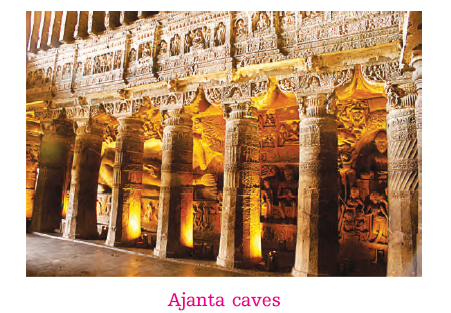
Painting is an important medium to express our thoughts. Early humans painted on the walls of caves. They tell us about the life they lived. The beautiful cave paintings of the Ajanta caves in Maharashtra depict the life of Lord Buddha.
The art of painting was made popular during the Mughal rule in India. The Mughal emperors invited painters from other countries to their courts. These painters painted miniature paintings, landscapes and scenes from royal courts. In modern times Jamini Roy, Nandlal Bose and M.F. Hussain made India's name famous in the field of painting.
Now, watch this video:-
Architecture
Architecture is the art of making buildings. Our country is very rich in architecture. The ruins of Indus valley civilization show that it had very well planned cities.
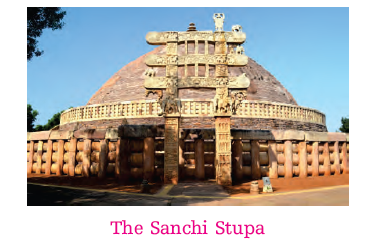
The Stupas built by Emperor Ashoka at Sanchi and Sarnath are beautiful examples of our architectural heritage. People from all over the world come to see them.
The Kailash Temple at Ellora has been carved out of a single stone. The Sun Temple at Konark, the temples at Khajuraho in Madhya Pradesh, Meenakshi Temple of Madurai and the Jain Temples of Mount Abu and Ranakpur are famous for their architecture.
The Mughals also contributed a lot to Indian architecture. The Taj Mahal in Agra is a beautiful monument. Lakhs of tourists visit it every year. The Gol Gumbaz at Bijapur has one of the largest doms in the world.
Buildings like Qutub Minar, Red Fort, Jama Masjid and Humayun's Tomb in Delhi are examples of their grand architecture.
The British brought a distinct style of architecture in India. The Rashtrapati Bhavan, the India Gate, the Parliament House in New Delhi and Victoria Memorial in Kolkata are some examples of British style of architecture. The Bahai Temple and the Akshardham Temple in New Delhi, the Vidhan Sabha in Bengaluru and the Assembly building in Mumbai are fine examples of modern Indian Architecture.
The Stupas built by Emperor Ashoka at Sanchi and Sarnath are beautiful examples of our architectural heritage. People from all over the world come to see them.
The Kailash Temple at Ellora has been carved out of a single stone. The Sun Temple at Konark, the temples at Khajuraho in Madhya Pradesh, Meenakshi Temple of Madurai and the Jain Temples of Mount Abu and Ranakpur are famous for their architecture.
The Mughals also contributed a lot to Indian architecture. The Taj Mahal in Agra is a beautiful monument. Lakhs of tourists visit it every year. The Gol Gumbaz at Bijapur has one of the largest doms in the world.
Buildings like Qutub Minar, Red Fort, Jama Masjid and Humayun's Tomb in Delhi are examples of their grand architecture.
The British brought a distinct style of architecture in India. The Rashtrapati Bhavan, the India Gate, the Parliament House in New Delhi and Victoria Memorial in Kolkata are some examples of British style of architecture. The Bahai Temple and the Akshardham Temple in New Delhi, the Vidhan Sabha in Bengaluru and the Assembly building in Mumbai are fine examples of modern Indian Architecture.
Now, watch this video:-
Our Festivals
A large number of festivals are celebrated in India. These festivals are of three main types :
(a) National
(b) Religious
(c) Harvest
The National festivals are Independence Day (15 August), Republic Day (26 January) and Gandhi Jayanti (2 October).
We celebrate a large number of Religious festivals. The important religious festivals are Diwali, Dussehra, Eid, Gurupurab, Christmas, Ganesh Chaturthi, Buddha Jayanti, Mahavir Jayanti, Shivratri, Janamashtami, and Muharram.
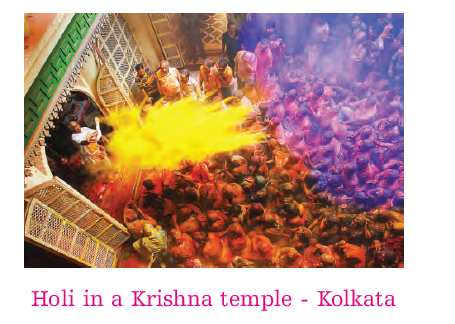 Some festivals are celebrated in particular seasons. Holi and Basant Panchami are festivals of the spring. Baisakhi in Punjab, Pongal in Tamil Nadu, Onam in Kerala and Bihu in Assam are Harvest festivals.
Festivals are fun. We decorate our houses, wear new clothes, exchange gifts with each other and eat sweets. Rangolis are made at the entrances and on the walls of the houses. We share our joy and happiness with others.
(a) National
(b) Religious
(c) Harvest
The National festivals are Independence Day (15 August), Republic Day (26 January) and Gandhi Jayanti (2 October).
We celebrate a large number of Religious festivals. The important religious festivals are Diwali, Dussehra, Eid, Gurupurab, Christmas, Ganesh Chaturthi, Buddha Jayanti, Mahavir Jayanti, Shivratri, Janamashtami, and Muharram.
Festivals are fun. We decorate our houses, wear new clothes, exchange gifts with each other and eat sweets. Rangolis are made at the entrances and on the walls of the houses. We share our joy and happiness with others.
Now, watch this video:-
Assignments:-
Read Chapter-22 (Page-141-142)
Read Chapter-22 (Page-141-142)
02 / 11 / 2021
Ch- 22 OUR RICH HERITAGE
Our Languages
India is a land of rich culture and heritage. We have diverse languages, customs, music, dances and dresses.
Language helps us to express our thoughts. It is an important medium for communication.
In our country we have 22 major languages. These languages have been recognized by the Constitution of India. These are
- Assamese
- Kannada
- Marathi
- Sindhi
- Bangla
- Kashmiri
- Nepali
- Tamil
- Bodo
- Konkani
- Oriya
- Telugu
- Dogri
- Maithili
- Punjabi
- Urdu
- Gujarati
- Malayalam
- Sanskrit
- Hindi
- Manipuri
- Santhali
Sanskrit and Tamil are the oldest languages of India. Indian languages are written in two different ways. Most of them are written from left to right. But Kashmiri, Sindhi and Urdu are written from right to left. Each language has a set of letters in which it is written, known as its script.
Language helps us to express our thoughts. It is an important medium for communication.
In our country we have 22 major languages. These languages have been recognized by the Constitution of India. These are
- Assamese
- Kannada
- Marathi
- Sindhi
- Bangla
- Kashmiri
- Nepali
- Tamil
- Bodo
- Konkani
- Oriya
- Telugu
- Dogri
- Maithili
- Punjabi
- Urdu
- Gujarati
- Malayalam
- Sanskrit
- Hindi
- Manipuri
- Santhali
Sanskrit and Tamil are the oldest languages of India. Indian languages are written in two different ways. Most of them are written from left to right. But Kashmiri, Sindhi and Urdu are written from right to left. Each language has a set of letters in which it is written, known as its script.
Now, watch this video:-
Our Dresses
The regional diversity of India can be seen in dresses worn by the people of different regions. The traditional costumes of men and women are different in most states.
Women generally wear sarees and salwar-kameez. Women in cities also wear trousers, shirts and skirts. The way women tie saree differs from state to state. The Maharashtrian, Gujarati and Tamil styles of tying the saree are entirely different from one another.
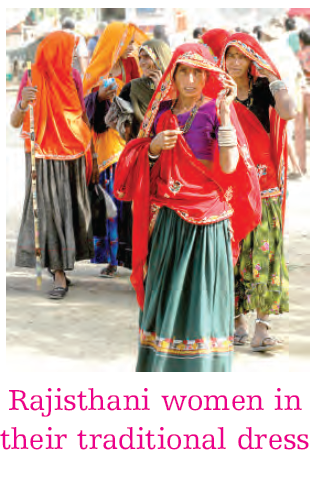 Women wear ghagra-cholis in Gujarat, Rajasthan, Haryana and Madhya Pradesh. They cover their heads with bright veils called odhnis. Women of Assam wear mekhla-chador a two piece saree. The mekhla is wrapped like a lungi and chador is draped separately to cover the upper body.
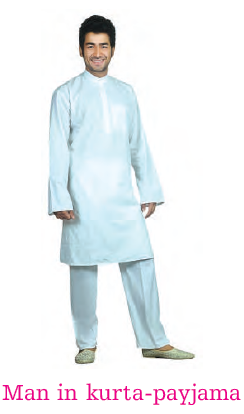 The traditional dresses of men in India are dhoti-kurta or lungi, kurta-payjama and a turban or cap. In Kashmir men wear a long woollen kurta called phiran. The style of tying turban also differs from state to state. Men in cities also wear trousers, jeans and Tshirts.
Women generally wear sarees and salwar-kameez. Women in cities also wear trousers, shirts and skirts. The way women tie saree differs from state to state. The Maharashtrian, Gujarati and Tamil styles of tying the saree are entirely different from one another.
Now, watch this video:-
Our Dance and Music
India has a rich tradition of dance and music. There are two types of dance and music in our county :
(i) Folk (ii) Classical
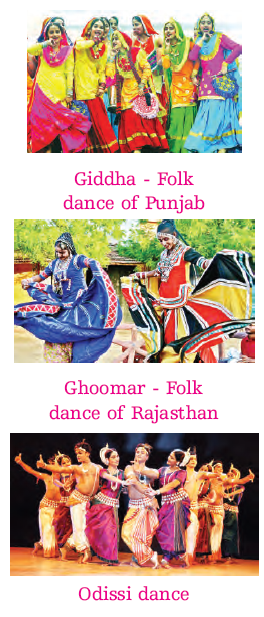
Folk dances in India are performed to express joy of various events. They are performed on every possible occasion to celebrate the beginning of a new season, sowing and harvesting of crops, birth of a child, a wedding or on festivals.
The Bhangra and Giddha are popular folk dances of Punjab to celebrate all occassions. he Ghoomar of Rajasthan, Raas Garba of Gujarat, Lavani of Maharashtra and the Bihu of Assam are very popular folk dances.
Folk dances of tribals of Nagaland, Mizoram, Meghalaya and Madhya Pradesh are very colourful.
Classical dances are quite different from folk dances. Our classical dances began as a form of worship. Dancers perform in temples. Kathak of Uttar Pradesh, Bharatnatyam of Tamil Nadu, Kuchipudi of Andhra Pradesh, Oddisi of Odisha, Manipuri of Manipur, Sattriya of Assam, Mohiniattam and Kathakali of Kerela and the Yakshaganam of Karnataka are also classical dances.
There are two types of classical music in our country. The Hindustani style was developed in North India. The Carnatic style was developed in South India. These styles are based on Ragas.
 Different musical instruments are used in classical music. Some of these are Veena, Sitar, Sarod, Shehnai, Flute, Harmonium, Tabla and Mridangam.
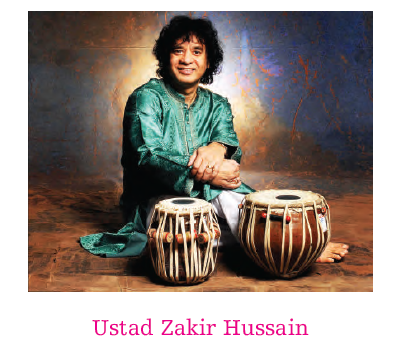 Some well- known Indian musicians are :
- Pandit Jas Raj (Vocalist)
- Ustad Zakir Hussain (Tabla)
- Ustad Amjad Ali Khan (Sarod)
- Ustad Bismillah Khan (Shehnai).
(i) Folk (ii) Classical
Folk dances in India are performed to express joy of various events. They are performed on every possible occasion to celebrate the beginning of a new season, sowing and harvesting of crops, birth of a child, a wedding or on festivals.
The Bhangra and Giddha are popular folk dances of Punjab to celebrate all occassions. he Ghoomar of Rajasthan, Raas Garba of Gujarat, Lavani of Maharashtra and the Bihu of Assam are very popular folk dances.
Folk dances of tribals of Nagaland, Mizoram, Meghalaya and Madhya Pradesh are very colourful.
Classical dances are quite different from folk dances. Our classical dances began as a form of worship. Dancers perform in temples. Kathak of Uttar Pradesh, Bharatnatyam of Tamil Nadu, Kuchipudi of Andhra Pradesh, Oddisi of Odisha, Manipuri of Manipur, Sattriya of Assam, Mohiniattam and Kathakali of Kerela and the Yakshaganam of Karnataka are also classical dances.
There are two types of classical music in our country. The Hindustani style was developed in North India. The Carnatic style was developed in South India. These styles are based on Ragas.
- Pandit Jas Raj (Vocalist)
- Ustad Zakir Hussain (Tabla)
- Ustad Amjad Ali Khan (Sarod)
- Ustad Bismillah Khan (Shehnai).
Now, watch this video:-
Assignments:-
Read Chapter-22 (Page-139-141)
27 / 10 / 2021
Ch- 15 OUR WATER RESOURCES
Assignments:- Do Pages-95-96
A. Tick (√) the correct answer in your S.st OCBs:-
1. The Bhakra Nangal Dam is built on :
a. Beas b. Sutlej c.Mahanadi
2. The highest dam in India is :
a. Bhakra Nangal Dam b.Hirakud Dam c.Tehri Dam
3. The longest dam in the world is:
a. Hirakud Dam b.Tungabhadra Dam c.Tehri Dam
4. Electricity generated from water is called:
a. Thermal Power b.Hydroelectricity c.Solar power
5. Nagarjuna Sagar dam is built on river:
a. Krishna b.Kaveri c.Yamuna
B. Answer the following questions in your S.st notebook:-
1. What are the three main means of irrigation? 2.Name the states irrigated by canals.
3. Why do the farmers in Tamil Nadu, Karnataka and Andhra Pradesh depend on tanks to irrigate their fields ?
4. What are dams?
5. How are dams useful to us?
6. How can we conserve water?
C. Name the following in your S.st OCBs:-
1. The highest dam in India:_____.
2. The longest dam in the world:_____.
3. The biggest man-made lake in India:_____.
4. The common means of irrigation in South India:_____.
5. Electricity produced from water:_____.
D. Match the following columns in your S.st OCBs:-
1. Bhakra Nangal dam a. Mahanadi river
2. Hirakud dam b. Krishna river
3. Nagarjuna Sagar dam c. Tungabhadra river
4. Tungabhadra dam d. Sutlej river
E. Fill in the blanks in your S.st OCBs:-
1. Dams are______made of concrete and steel.
2. Dams provide_____for irrigation.
3. Dams help to produce_____.
4. Dams act as_____.
5. Dams control_____.
F. Name five dams of India:-
_____ _____ _____ _____ _____
26 / 10 / 2021
Ch- 15 OUR WATER RESOURCES
INTRODUCTION
All living beings need water to survive. We need water for most of our daily needs like drinking, cooking, bathing, cleaning and washing clothes.
We also need water for agriculture. Crops cannot be grown without water.
The main occupation of the majority of the people in India is farming. Since it does not rain regularly throughout the year, we cannot depend on rain alone to water our fields. We need to make other arrangements to irrigate them. Irrigation prevents crop failure as it supplies timely water to the fields. It also helps in producing greater and better quality yield. Multicropping can be possible with the help of irrigation.
We also need water for agriculture. Crops cannot be grown without water.
The main occupation of the majority of the people in India is farming. Since it does not rain regularly throughout the year, we cannot depend on rain alone to water our fields. We need to make other arrangements to irrigate them. Irrigation prevents crop failure as it supplies timely water to the fields. It also helps in producing greater and better quality yield. Multicropping can be possible with the help of irrigation.
Now, watch this video:-
MEANS OF IRRIGATION
We have developed many means of irrigation. Three such important means of irrigation are – canals, tube wells and tanks.
Canals
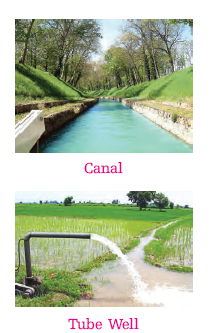
Canals are the channels built to divert the river water to far off fields where there is not enough water. There is a good network of canals in Punjab, Uttar Pradesh, Haryana, West Bengal, Andhra Pradesh and Tamil Nadu. Of the total irrigated land, about 40 per cent area gets water from the canals.
 Wells and Tube Wells
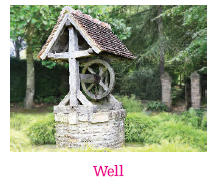
The underground water is used through wells and tube wells. When the underground water lies at a great depth, water is taken out with the help of a Persian wheel or a diesel or an electric pump. Such wells are called tube wells. Wells and tube wells are used in Uttar Pradesh, Punjab, Haryana, Gujarat, Maharashtra and Rajasthan.
 Tanks
Tanks
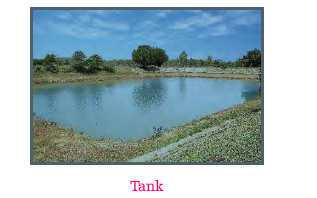
Tanks are generally made in hilly areas and plateau regions to store the rainwater. In these areas, it isnot possible to dig wells, as the soil is hard and rocky. Tanks are generally used in Tamil Nadu, Karnataka and Andhra Pradesh.
 Dams
Dams
To get a regular supply of water for our canals, dams have been built across some big and important rivers in different parts of our country.
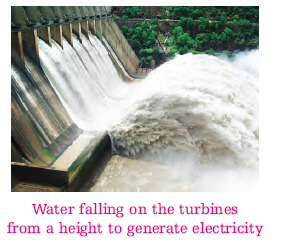 Dams are strong walls or the barriers made of concrete and steel to control the flow of water in the rivers.
Dams are also called multipurpose projects, as they are useful in many ways:
1. Dams act as reservoirs. A huge man-made lake is formed.
2. The water from the lake is diverted into canals for irrigation.
3. Dams also help in controlling floods behind a dam.
4. Dams help in producing hydroelectricity. Water is allowed to fall from a great height on machines called the turbines. When water falls on these machines with great force, they move and start off other machines that produce electricity. This electricity is then carried by wires to far off places in houses and factories.
Electricity generated by using the energy of water, falling from a height, is called hydroelectricity.
Since dams are useful to us in many ways, they are also known as multi-purpose projects.
Pandit Jawaharlal Nehru, the first Prime Minister of India, called these multi-purpose projects, the ‘Temples of Modern India’.
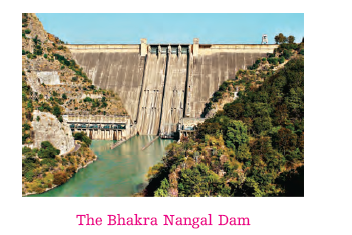
The Bhakra Nangal Dam built on the Sutlej river is one of the highest dams in the world. It forms a huge lake, called the Govind Sagar Lake, behind it. This lake is the biggest man-made lake in India. This project provides water and electricity to Punjab, Haryana, Rajasthan, Himachal Pradesh and Delhi.
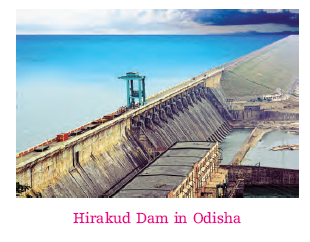
 The Hirakud Dam built on the Mahanadi river is the longest dam in the world. The Tungabhadra Dam on the river Tungabhadra at Hospete in Karnataka and the Nagarjuna Sagar Dam on the river Krishna in Andhra Pradesh are important projects in South India.
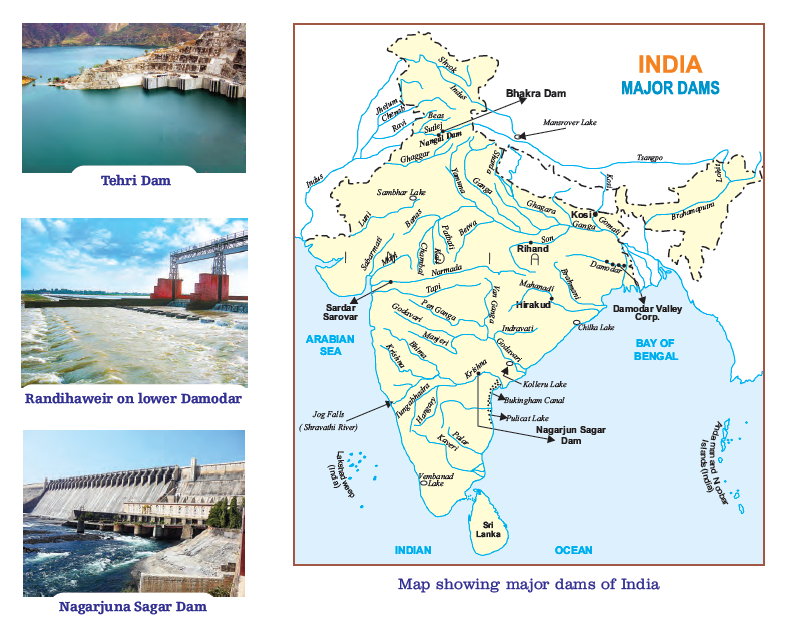 The Tehri Dam in Uttar Pradesh is presently the highest dam of India.
The Damodar Valley Project on the river Damodar in West Bengal has been built to check floods in this river.
Canals
Canals are the channels built to divert the river water to far off fields where there is not enough water. There is a good network of canals in Punjab, Uttar Pradesh, Haryana, West Bengal, Andhra Pradesh and Tamil Nadu. Of the total irrigated land, about 40 per cent area gets water from the canals.
The underground water is used through wells and tube wells. When the underground water lies at a great depth, water is taken out with the help of a Persian wheel or a diesel or an electric pump. Such wells are called tube wells. Wells and tube wells are used in Uttar Pradesh, Punjab, Haryana, Gujarat, Maharashtra and Rajasthan.
Tanks are generally made in hilly areas and plateau regions to store the rainwater. In these areas, it isnot possible to dig wells, as the soil is hard and rocky. Tanks are generally used in Tamil Nadu, Karnataka and Andhra Pradesh.
To get a regular supply of water for our canals, dams have been built across some big and important rivers in different parts of our country.
Dams are also called multipurpose projects, as they are useful in many ways:
1. Dams act as reservoirs. A huge man-made lake is formed.
2. The water from the lake is diverted into canals for irrigation.
3. Dams also help in controlling floods behind a dam.
4. Dams help in producing hydroelectricity. Water is allowed to fall from a great height on machines called the turbines. When water falls on these machines with great force, they move and start off other machines that produce electricity. This electricity is then carried by wires to far off places in houses and factories.
Electricity generated by using the energy of water, falling from a height, is called hydroelectricity.
Since dams are useful to us in many ways, they are also known as multi-purpose projects.
Pandit Jawaharlal Nehru, the first Prime Minister of India, called these multi-purpose projects, the ‘Temples of Modern India’.
The Bhakra Nangal Dam built on the Sutlej river is one of the highest dams in the world. It forms a huge lake, called the Govind Sagar Lake, behind it. This lake is the biggest man-made lake in India. This project provides water and electricity to Punjab, Haryana, Rajasthan, Himachal Pradesh and Delhi.
The Damodar Valley Project on the river Damodar in West Bengal has been built to check floods in this river.
Now, watch this video:-
WATER CONSERVATION
Every drop of water is very precious. If we are not careful about water, there will not be enough water left for us in the future.
Careful and economical use of water is called water conservation. It can be done in the following manner :
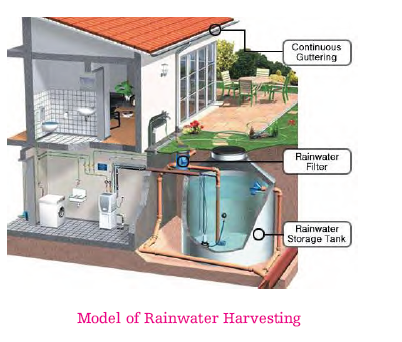
1. Rainwater Harvesting – Rainwater should be collected in tanks and stored in Underground Reservoirs. The stored water can be used during the dry season when there is shortage of water.
 2. Planting more trees –Forests help in attracting rainfall and prevent soil erosion.
Careful and economical use of water is called water conservation. It can be done in the following manner :
1. Rainwater Harvesting – Rainwater should be collected in tanks and stored in Underground Reservoirs. The stored water can be used during the dry season when there is shortage of water.
Now, watch this video:-
Assignments:-
Read Chapter-15 (Page-91-94)
20 / 10 / 2021
Ch- 8 LIFE OF PEOPLE IN THE PLATEAU REGION
Assignments:- Do Pages-50-51
A. Tick (√) the correct answer in your S.st OCBs:-
1. Lavani is a famous :
a. Dress b. Dance c. Musical form
2.Telugu is mostly spoken in:
a. Karnataka b. Tamil Nadu c. Andhra Pradesh
3. The capital of Madhya Pradesh is :
a. Bhopal b. Chennai c. Raipur
4. Yakashgana is the famous traditional theatre of :
a. Andhra Pradesh b. Karnataka c. Chhattisgarh
5. Nagpur is famous for its :
a. Mangoes b. Oranges c.Bananas
B. Fill in the blanks in your S.st OCBs:-
1. In Karnataka , mulberry trees are grown to rear ________.
2.Tea is grown in the hill slopes of ________ hills.
3. The artisans of Andhra Pradesh and known for their ________ art .
4. ________ is the special snack of the people of Maharashtra.
5.The main festival of Maharashtra is ________ .
6. ________ is the main festival of Tamil Nadu.
C. Write 'T' for true and 'F' for false in your S.st OCBs:-
1. Madhya Pradesh is in the north of India.
2. Bhimbetka is famous for cave paintings.
3. Raipur is the capital of Karnataka.
4. Alphanso mangoes of Maharashtra very famous.
5. Karnataka has rocky and uneven surface.
D. Answer the following questions in your S.st notebook:-
1. Name the states that form the Plateau Region of India.
2. What do people like to eat in Tamil Nadu ?
3. Why is Mumbai called an industrial centre?
4. What are the industries located in Karnataka?
5. Where are Ajanta and Ellora caves ?
6. What are the famous things in Andhra Pradesh?
7. Name the main festivals of Maharashtra, Tamil Nadu and Karnataka.
E. Write the name of the place which is famous for. Do this exercise in your S.st OCBs:-
1. Kanjeevaram sarees. __________.
2. Bidri art. __________.
3. Dosa , idli, sambhar , Upma and coconut chutney. __________.
4. Pearls and semi precious stones. __________.
5. Carnatic music. __________.
06 / 10 / 2021
Ch- 8 LIFE OF PEOPLE IN THE PLATEAU REGION
ANDHRA PRADESH
Hyderabad is the capital of Andhra Pradesh. Farming is the main occupation of the people. They grow rice, jowar, tobacoo, sugarcane, and groundnut. The state is the largest producer of tobacoo in India.
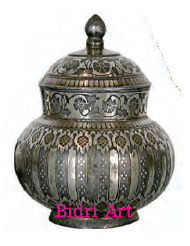 People mostly speak Telugu. Urdu is also spoken in Hyderabad. The famous dance of Andhra Pradesh is called the Kuchipudi dance. The artisans of Andhra Pradesh are known for their 'Bidri art'. Hyderabad is known for its bangles and jewellery of pearls and semi-precious stones.
The Charminar, The Salarjung Museum, Golconda Fort and a huge statue of Lord Buddha in the Hussain Sagar Lake are popular tourist attractions. Tirupati is the most popular place of pilgrimage, where thousands of people visit every year.
The Charminar, The Salarjung Museum, Golconda Fort and a huge statue of Lord Buddha in the Hussain Sagar Lake are popular tourist attractions. Tirupati is the most popular place of pilgrimage, where thousands of people visit every year.
Now, watch this video:-
TAMIL NADU
To the south of Andhra Pradesh lies Tamil Nadu. Farming is the main occupation of the people. They grow rice, sugarcane, cotton and groundnut. Tea and coffee are grown in the hill slopes of Nilgiri Hills in Tamil Nadu.
Chennai is the capital of Tamil Nadu. Tamil is the main language. The Integral Coach Factory at Perambur makes railway coaches. Kanchipuram is famous for its silk sarees.
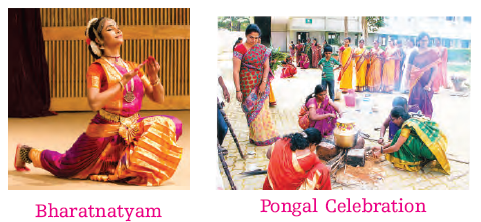
Tamil Nadu is famous for its temples. The main temple towns are Madurai, Thanjaur, Thiruchhirappalli and Kanchipuram.
Now, watch this video:-
Assignments:-
Read Chapter-08 (Page-49)
05 / 10 / 2021
Ch- 8 LIFE OF PEOPLE IN THE PLATEAU REGION
MADHYA PRADESH
The plateau region includes Madhya Pradesh, Chattisgarh, and parts of Maharashtra, Karnataka, Tamil Nadu and Andhra Pradesh. Madhya Pradesh is in the centre of India. Its capital is Bhopal. Other big cities include Gwalior, Indore and Jabalpur. Some of the famous tourist places in Madhya Pradesh include the temples at Khajuraho, the Stupas at Sanchi and the Cave paintings at Bhimbetka.
 Panchmari is a beautiful hill station of the state. It has famous National Parks like Kanha and Bandhavgarh. Most of the people here are farmers. Wheat, jowar, cotton, pulses, and oil seeds are major crops.
Now, watch this video:-
CHHATTISGARH
Chattisgarh lies to the south of the Chota Nagpur Plateau. Raipur is the capital of the state. Agriculture is the main occupation of the people. Rice, linseed, betel and watermelon are grown here.
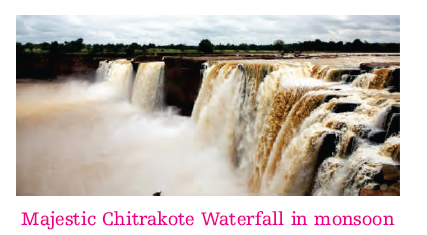 Chattisgarh is rich in mineral resources. The town of Bhilai is famous for its steel plant. Other important cities of interest are Korba, Durg and Bilaspur. The triblal people live in the Bastar region. The state has many waterfalls such as Chitrakote and Tiragarh water falls and national parks and wildlife sanctuaries.
Now, watch this video:-
MAHARASHTRA
Maharashtra lies in the northwestern part of the Deccan Plateau. Godawari and Krishna rivers flow through the state. Mumbai, the capital of Maharashtra, is a major industrial and film centre of India. Many important industries like textile, automobiles and electronics are located in this state.
Most of the people here are farmers. They grow cotton, jowar, bajra, groundnuts and sugarcane. Fruits such as oranges, mangoes and bananas also grow here.
 Maharashtra is famous for its Alphanso mangoes. Nagpur is famous for its oranges. Bhelpuri is the special snack of the people of Maharashtra.
The famous Ajanta and Ellora Caves are situated in the Aurangabad district of Maharashtra. The people are fond of music and dance. Tamasha is the most popular dance drama.
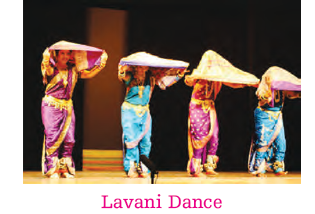 Lavani is the popular dance form. People of Maharashtra speak Marathi and Konkani. The main festivals are Ganesh Chaturthi, Navratri, Diwali, Gudi Padwa.
Men wear dhoti-kurta, while the women wear a 9-yard saree tied in a special way.
Most of the people here are farmers. They grow cotton, jowar, bajra, groundnuts and sugarcane. Fruits such as oranges, mangoes and bananas also grow here.
The famous Ajanta and Ellora Caves are situated in the Aurangabad district of Maharashtra. The people are fond of music and dance. Tamasha is the most popular dance drama.
Men wear dhoti-kurta, while the women wear a 9-yard saree tied in a special way.
Now, watch this video:-
KARNATAKA
To the south of Maharashtra is Karnataka. Krishna, Tungabhdra and Kaveri rivers flow through this state. Karnataka has rocky and uneven surface. Most of the people are farmers. The main crops grown are jowar, cotton, sugarcane, coffee and spices. The forests are full of teak and sandalwood trees.
 Bengaluru is the capital of Karnataka and is known as the 'Garden City' because it has many parks. It is a big industrial entre. It has many factories producing aeroplanes, watches, telephones, machinery etc. It is a major centre of IT (Information Technology) industry. It is also called the Silicon Valley of the East.
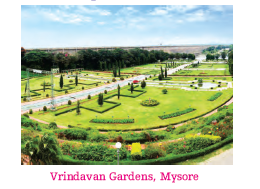
The Vrindavan Gardens in Mysore is a famous tourist spot. In Karnataka, the mullberry trees are grown to rear silkworms. Silk thread is produced from silk cocoons.
The people of state speak Kannada. Men usually wear a lungi and shirt while women wear colourful silk sarees. Yakashagana is the traditional folk theatre of Karnataka. Carnatic Music is popular throughout country. Handicraft items made of sandalwood are very famous.
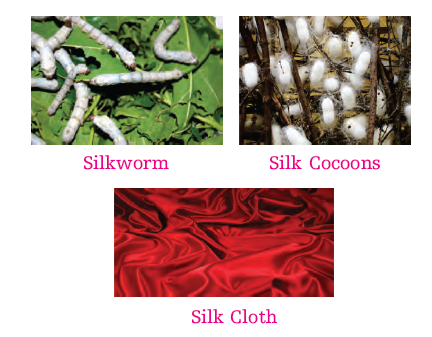 The people of Karnataka celebrate Dussehra with great joy and pomp and show. Dussehra of Mysore is very famous all over India.
The Vrindavan Gardens in Mysore is a famous tourist spot. In Karnataka, the mullberry trees are grown to rear silkworms. Silk thread is produced from silk cocoons.
The people of state speak Kannada. Men usually wear a lungi and shirt while women wear colourful silk sarees. Yakashagana is the traditional folk theatre of Karnataka. Carnatic Music is popular throughout country. Handicraft items made of sandalwood are very famous.
Now, watch this video:-
Assignments:-
Read Chapter-08 (Page-47&48)
15 / 09 / 2021
Ch- 20 OUR MODES OF TRANSPORT
Assignments:- Do Pages-128-129
A. Tick (√) the correct answer in your S.st OCBs:-
1. Rajiv Gandhi International Airport is in:
a. Kolkata b. Chennai c. Hyderabad
2. Vallabhbhai International Airport is in:
a. Mumbai b. Delhi c. Ahmedabad
3. Air transport was started in India in the year:
a. 1911 b. 1921 c. 1948
4. The most popular mode of transport in India is :
a. Airways b. Roadways c. Railways
B. Fill in the blanks in your S.st OCBs:-
1. The roads in the border region are looked after by ___________.
2. ___________ connect important places within a state.
3. The Indian Railways is the___________in Asia.
4. The first railway train was started in 1853 between___________and___________.
5. The underground railway in Kolkata is known as the___________.
C. Write 'T' for true and 'F' for false in your S.st OCBs:-
1. Airways is the fastest means of transport .
2. The first train was started in India in 1953.
3. Shershah Suri Marg was built in 1542.
4. There are around 17 airports in India.
5. Water transport is cheap.
D. Answer the following questions in your S.st notebook:-
1. What are National Highways?
2. What are State Highways?
3. How are roads better than railways ?
4. How are the railways useful in wars and emergencies ?
5. What are the advantages of airways?
E. Name the following in your S.st OCBs:-
1. The road at the highest altitude in the world. __________.
2. Superfast train between Delhi and Mumbai.__________.
3. The longest national highway in India.__________.
4. Two main airlines of India.__________.
5. Two international airports of India.__________.
14 / 09 / 2021
Ch- 20 OUR MODES OF TRANSPORT
AIRWAYS
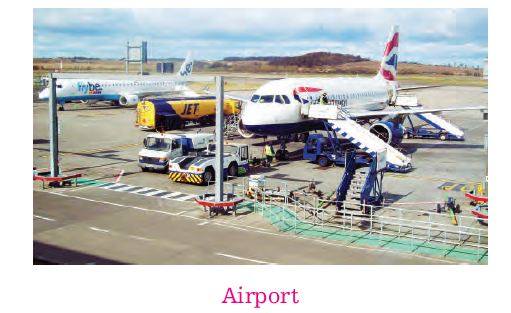
Airways provide the fastest means of transport. Our major cities are now well connected by air services. It is specially useful for travelling to other countries. Air transport was started in India in 1911.
Important airlines of our country are :
1. Air India
2. Jet Airways
3. IndiGo
4. Kingfisher Airlines
5. Go Air
6. Spice Jet
Important airlines of our country are :
1. Air India
2. Jet Airways
3. IndiGo
4. Kingfisher Airlines
5. Go Air
6. Spice Jet
India’s major international airports are:
1. Delhi : Indira Gandhi International Airport
2. Mumbai : Chhatrapati Shivaji International Airport.
3. Hyderabad : Rajiv Gandhi International Airport.
4. Bengaluru : Bengaluru International Airport
5. Chennai : Annadurai International Airport.
6. Kolkata : Netaji Subhash Chandra Bose International Airport
7. Kochi : Cochin International Airport.
8. Ahmedabad : Vallabhbhai International Airport
There are around 46 major airports in India. We have about 17 international airports from where flights to other countries operate.
Aeroplanes have made travelling easy, fast and comfortable but it is very expensive.
Air transport is specially useful in wars, famines and floods, for dropping food packets, medicines and clothes to the affected areas. Air transport like helicopters and aeroplanes are specially useful for reaching hilly terrains which are difficult to connect through railways or roads.
Letters and parcels can be sent quickly to all the corners of the world by the airways. It also helps to carry on trade with other countries of the world.
1. Delhi : Indira Gandhi International Airport
2. Mumbai : Chhatrapati Shivaji International Airport.
3. Hyderabad : Rajiv Gandhi International Airport.
4. Bengaluru : Bengaluru International Airport
5. Chennai : Annadurai International Airport.
6. Kolkata : Netaji Subhash Chandra Bose International Airport
7. Kochi : Cochin International Airport.
8. Ahmedabad : Vallabhbhai International Airport
There are around 46 major airports in India. We have about 17 international airports from where flights to other countries operate.
Aeroplanes have made travelling easy, fast and comfortable but it is very expensive.
Air transport is specially useful in wars, famines and floods, for dropping food packets, medicines and clothes to the affected areas. Air transport like helicopters and aeroplanes are specially useful for reaching hilly terrains which are difficult to connect through railways or roads.
Letters and parcels can be sent quickly to all the corners of the world by the airways. It also helps to carry on trade with other countries of the world.
WATERWAYS
Water transport is the oldest means of transport in the world.
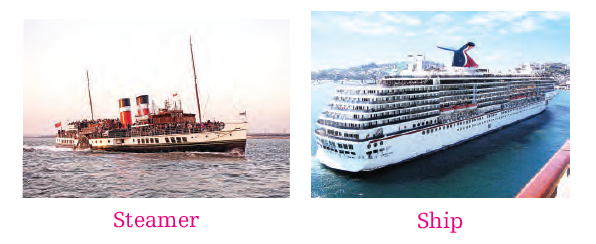
Water transport includes boats, steamers, canoes, yachts and ships. Boats and steamers are mainly used to carry goods and people across rivers and canals. Water transport is fuel-efficient. It is also eco-friendly. The state of Kerala has many inland aterways in its backwaters. Bengal, Goa and Andhra Pradesh are some of the other states which have waterways.
Water transport can be of two types:
1. Inland waterways
2. Oceanic waterways
Oceanic waterways include large ships for travelling in oceans and seas. Large ships sail from the ports in the sea carrying goods to and from all parts of the world. There are about ten major ports and about 160 smaller ports on the Indian coasts. Mumbai is the largest port of the country.
Water transport includes boats, steamers, canoes, yachts and ships. Boats and steamers are mainly used to carry goods and people across rivers and canals. Water transport is fuel-efficient. It is also eco-friendly. The state of Kerala has many inland aterways in its backwaters. Bengal, Goa and Andhra Pradesh are some of the other states which have waterways.
Water transport can be of two types:
1. Inland waterways
2. Oceanic waterways
Oceanic waterways include large ships for travelling in oceans and seas. Large ships sail from the ports in the sea carrying goods to and from all parts of the world. There are about ten major ports and about 160 smaller ports on the Indian coasts. Mumbai is the largest port of the country.
Ships are built and repaired at shipyards in Kolkata, Mumbai, Vishakhapatnam and Cochin.
- Water transport is slow but cheap. It is specially useful for carrying heavy and bulky material.
- One single ship can carry thousands of passengers and tonnes of goods at the same time.
- Huge oil tankers carry oil to different parts of the world.
- They also carry wheat, rice, sugar, jute, edible oil and ores from one country to another. In fact most of India’s foreign trade is through ocean routes.
- One single ship can carry thousands of passengers and tonnes of goods at the same time.
- Huge oil tankers carry oil to different parts of the world.
- They also carry wheat, rice, sugar, jute, edible oil and ores from one country to another. In fact most of India’s foreign trade is through ocean routes.
Assignments:-
Read Chapter-20 (Page-125-127)
Read Chapter-20 (Page-125-127)
08 / 09 / 2021
Ch- 20 OUR MODES OF TRANSPORT
INTRODUCTION
Transport is a vital part of modern life. It is the lifeline of a country. Various means of transport have made it possible to carry goods and people to far off places in a very short time. People use different means of transport depending on their needs, and how much money they can spend.
ROADWAYS
Our country has the largest network of roads in the world. Roads are an important part of India’s transport system. Roads can be built even in places where trains cannot go, such as the hilly areas. It is easier and less expensive to build roads than to lay railway tracks on steep mountain slopes.
Our soldiers on the borders in the northern hilly areas travel by roads. These roads are built and looked after by the Border Roads Organization.
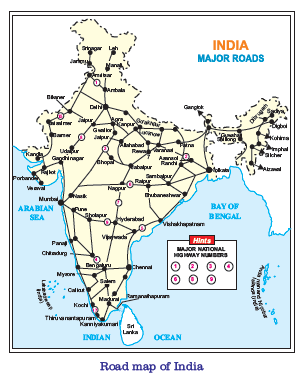
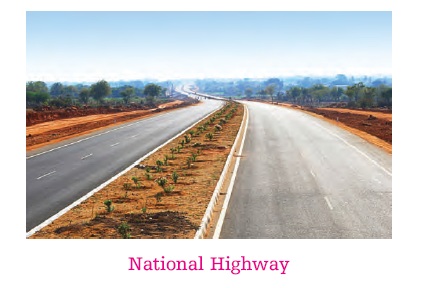 Roads which connect important cities are called the National Highways. One of our most important National Highways is the Shershah Suri Marg which runs from Amritsar to Kolkata. It is about 2,000 kilometres in length. It was built in 1542, and was called the Grand Trunk Road (G.T. Road). It connects Peshawar (now in Pakistan) to Kolkata.
 The State Highways connect important cities within a state. Most of the State Highways are connected with the National Highways.
Road transport has many advantages :
- It is very convenient for short distances.
- Vehicles can be driven right up to the doorstep.
- It is also helpful to rush food and medical supplies during emergencies like floods, famines and earthquakes.
- Even during wars, arms, ammunition and troops can be moved quickly.
To meet the demands of the increased traffic, many countries have flyovers, freeways and expressways.
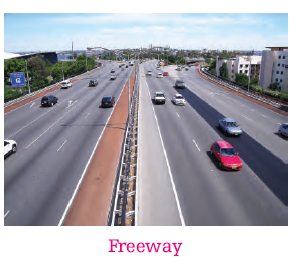 Freeways and expressways are wide roads which allow fast traffic in one direction only. There are no traffic lights.
Our soldiers on the borders in the northern hilly areas travel by roads. These roads are built and looked after by the Border Roads Organization.
Road transport has many advantages :
- It is very convenient for short distances.
- Vehicles can be driven right up to the doorstep.
- It is also helpful to rush food and medical supplies during emergencies like floods, famines and earthquakes.
- Even during wars, arms, ammunition and troops can be moved quickly.
To meet the demands of the increased traffic, many countries have flyovers, freeways and expressways.
RAILWAYS
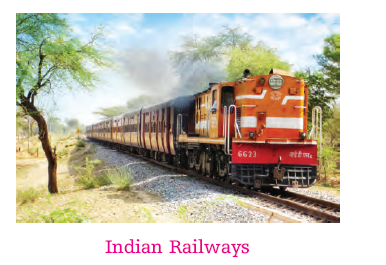
India’s railway system is the largest in Asia and second largest in the world.
Everyday, more than 11,000 trains carry about 102 lakh passengers to different parts of the country. Our trains transport about six lakh tonnes of goods daily, over a distance of about 80,000 kilometres.
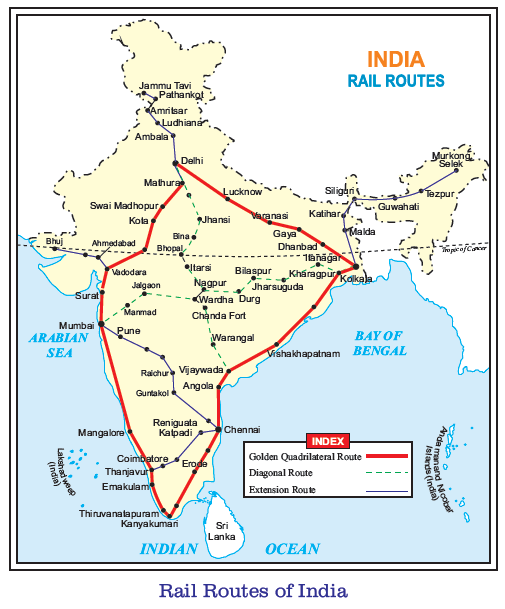
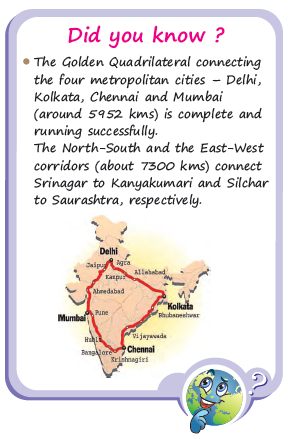 All important towns and cities are connected by Railways. The Railways provide a comfortable, cheap and fast means of transport.
The first railway train in India was started in 1853 between Mumbai and Thane. Today, railway tracks are being laid all over the country.
We have many fast trains which run on electricity. More and more lines are being electrified. Some of these trains run at a very high speed. The fastest train in India is the Shatabdi Express. It runs at about 190 kilometres per hour.
 Other fast trains are the Rajdhani Express between Delhi and Mumbai, Delhi and Kolkata, the Taj Express between Delhi and Gwalior, and the Pink City Express between Delhi and Jaipur. These trains are called the Superfast trains.
We also have a system of underground local railway, called the Metro, in Kolkata, Delhi and Bengaluru. It is an electric train which runs in an underground tunnel within the city. In Delhi it runs partly underground and partly over the surface. Chennai, Kolkata and Mumbai have local trains to travel from one part of the city to another. Multi-Modal Transport System (MMTS) has been introduced in Hyderabad.
 The railway is the most popular means of transport. In times of emergencies such as floods, famines and wars railways are used to carry men and materials.
Everyday, more than 11,000 trains carry about 102 lakh passengers to different parts of the country. Our trains transport about six lakh tonnes of goods daily, over a distance of about 80,000 kilometres.
The first railway train in India was started in 1853 between Mumbai and Thane. Today, railway tracks are being laid all over the country.
We have many fast trains which run on electricity. More and more lines are being electrified. Some of these trains run at a very high speed. The fastest train in India is the Shatabdi Express. It runs at about 190 kilometres per hour.
We also have a system of underground local railway, called the Metro, in Kolkata, Delhi and Bengaluru. It is an electric train which runs in an underground tunnel within the city. In Delhi it runs partly underground and partly over the surface. Chennai, Kolkata and Mumbai have local trains to travel from one part of the city to another. Multi-Modal Transport System (MMTS) has been introduced in Hyderabad.
Assignments:-
Read Chapter-20 (Page-123-125)
Read Chapter-20 (Page-123-125)
07 / 09 / 2021
Ch- 14 OUR FORESTS AND WILDLIFE

A. Tick (√) the correct answer in your S.st OCBs:-
1.There are _____types of forests in India.
a. Two. b. Three. c. Five
2. Ebony is found in:
a. Thorny Forests b.Deciduous Forests. c. Evergreen Forests
3. The_______forests are called Sunderbans:
a. Evergreen. b. Thorny. c. Tidal
4. Jim Corbett National Park is situated in :
a. Gujarat. b. Uttarakhand. c. Assam
B. Write 'T' for true and 'F' for false in your S.st OCBs:-
1. The deltas of the Ganga and Brahmaputra in Bengal have Thorny forests
2.The Sunderbans are the home of famous Royal Bengal Tiger.
3. An elephant is killed for its ivory tusks.
4. Thorny forests are found in Gujarat.
5. Teak, Sal and Shisham trees are found in deciduous forests.
C. Answer the following questions in your S.st notebook:-
1. Why are the forests being cut down?
2. Name the different kinds of forests. Also mention where they are located in India.
3. What is the difference between the Evergreen forests and the Deciduous forests?
4. What is Van Mahotsav?
5. How do forests help us? Mention some of the valuable products obtained from forests.
6. What is a wildlife sanctuary? Name any three well-known sanctuaries.
D. Match the following columns in your S.st OCBs:-

E. Name the following in your S.st OCBs:-
1. Three trees that grow in the Evergreen forests:
2. Three trees that grow in the Deciduous forests :
3. Three trees of the Coniferous forests:
01 / 09 / 2021
Ch- 14 OUR FORESTS AND WILDLIFE
5. TIDAL FORESTS
The deltas of the Ganga and the Brahmaputra in West Bengal have tidal forests. The common trees found in these forests are the mangrove trees. Sundari is the most common mangrove tree. The forests are popularly called the ‘Sunderbans’ because of the Sundari trees found here.
Now, watch this video:-
Forest are very useful to us in many ways:
1. Timber or wood is one of the most important things we get from the forests. Timber is used for making buildings, furniture, tools and implements.
2. Softwood is used to make crates, matchsticks, paper and plywood.
3. Firewood is used as a fuel.
4. Resin from trees like pine is used to make paints and varnish.
5. Parts of some trees such as neem are used to make medicines.
6. Forests help in conserving the soil.
7. Forests make the climate cool and pleasant. They freshen up the air by providing oxygen.
8. Forests attract rainfall. Without forests, the earth would become a hot desert.
9. Forests provide shelter to wildlife.
10. Forests attract tourists.
4. Resin from trees like pine is used to make paints and varnish.
5. Parts of some trees such as neem are used to make medicines.
6. Forests help in conserving the soil.
7. Forests make the climate cool and pleasant. They freshen up the air by providing oxygen.
8. Forests attract rainfall. Without forests, the earth would become a hot desert.
9. Forests provide shelter to wildlife.
10. Forests attract tourists.
Now, watch this video:-
CONSERVATION OF FORESTS
More and more people are realising the importance of trees and plants. Merciless and random cutting of trees must be stopped to protect our Mother Earth.
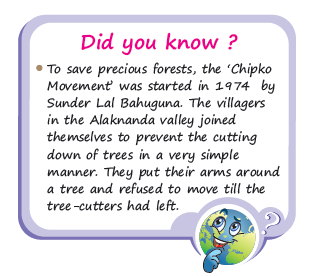
Van Mahotsav is celebrated at the beginning of the rainy season.Every year on Van Mahotsav Day, a large number of trees are planted. Programmes like ‘For Every Child a Tree’ require every child to plant and look after a tree.
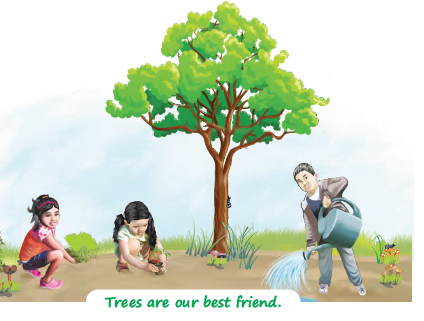
Now, watch this video:-
WILDLIFE
India has a large variety of wildlife. Our forests are full of wild animals. Some of these animals are not found anywhere else in the world.
The Sunderbans are the home of the famous Royal Bengal Tiger. In the North-East, we have the elephant, the rhino, the tiger and the deer.
The deciduous forests give shelter to the bear, leopard, tiger, boar and the wild buffalo. The Gir Forests in Gujarat are famous for lions.
We also have a large variety of birds, fish and eptiles such as snakes, pythons and cobras. Crocodiles and tortoises are found in many Indian rivers. Merciless clearing of jungles and cutting of trees deforestation) has led to the large-scale destruction of our wildlife. Animals, insects and various types of birds which live in the forests have lost their homes.
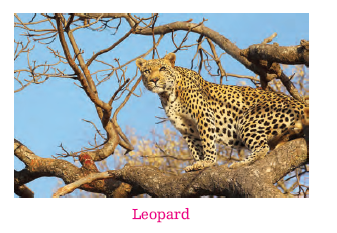 Many species of mammals, birds and reptiles have either become extinct or their numbers have reduced considerably. Basically, we should encourage the planting of trees hich is known as Afforestation.
Reforestation means the restoring of destroyed forests by planting more trees.
Sometimes, people hunt animals like tigers, leopards, etc. for their skin. People, who hunt and kill animals for their skin are called poachers. An Elephant is killed for its ivory tusks. Our Government has banned the export of ivory and animal skin. The Rhino Project at Kaziranga in Assam protects the one-horned rhino.
The Rhino’s horn is used for making medicines. Rhino is killed because its horns fetch a lot of money. The musk deer is killed for the musk which is used as perfume.
The Sunderbans are the home of the famous Royal Bengal Tiger. In the North-East, we have the elephant, the rhino, the tiger and the deer.
The deciduous forests give shelter to the bear, leopard, tiger, boar and the wild buffalo. The Gir Forests in Gujarat are famous for lions.
We also have a large variety of birds, fish and eptiles such as snakes, pythons and cobras. Crocodiles and tortoises are found in many Indian rivers. Merciless clearing of jungles and cutting of trees deforestation) has led to the large-scale destruction of our wildlife. Animals, insects and various types of birds which live in the forests have lost their homes.
Reforestation means the restoring of destroyed forests by planting more trees.
Sometimes, people hunt animals like tigers, leopards, etc. for their skin. People, who hunt and kill animals for their skin are called poachers. An Elephant is killed for its ivory tusks. Our Government has banned the export of ivory and animal skin. The Rhino Project at Kaziranga in Assam protects the one-horned rhino.
The Rhino’s horn is used for making medicines. Rhino is killed because its horns fetch a lot of money. The musk deer is killed for the musk which is used as perfume.
Now, watch this video:
CONSERVATION OF WILDLIFE
In order to protect our wildlife, the Government has decided to declare forests as protected areas. These protected areas are called the Wildlife Sanctuaries or National Parks. These sanctuaries are protected by special forest guards.
There are about 150 wildlife sanctuaries in India. Tourists from all over the world visit our country to see these animals. Some of the well-known sanctuaries are the Sunderbans in West Bengal, the Jim Corbett National Park in Uttarakhand, the Kaziranga National Park in Assam, the Gir Sanctuary in Gujarat, the Periyar in Kerela and the Manas in Assam.
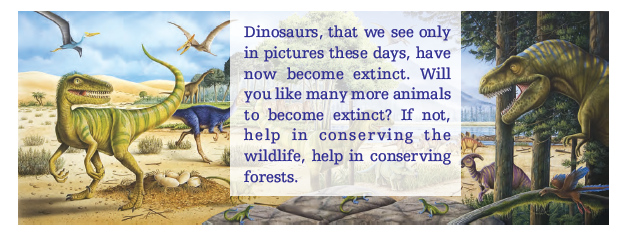
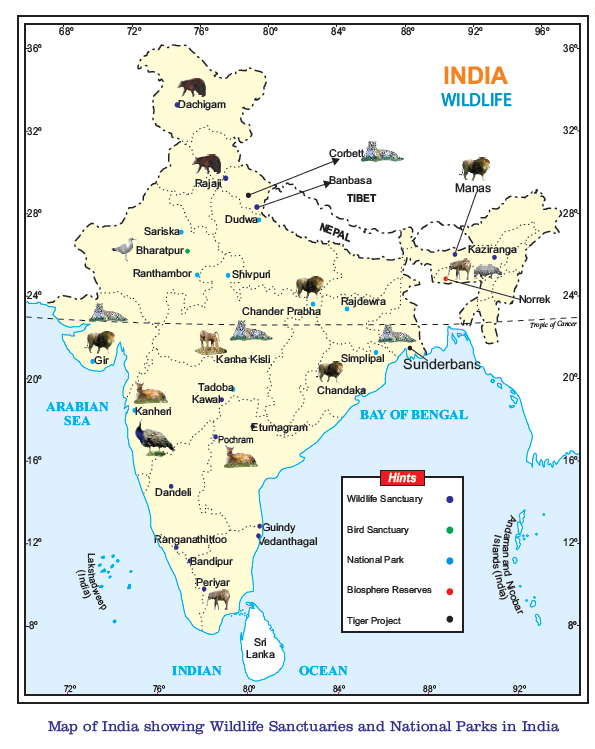
There are about 150 wildlife sanctuaries in India. Tourists from all over the world visit our country to see these animals. Some of the well-known sanctuaries are the Sunderbans in West Bengal, the Jim Corbett National Park in Uttarakhand, the Kaziranga National Park in Assam, the Gir Sanctuary in Gujarat, the Periyar in Kerela and the Manas in Assam.
Now, watch this video:-
Assignments:-
Read Chapter-14 (Page-84-87)
Read Chapter-14 (Page-84-87)
31 / 08 / 2021
Ch- 14 OUR FORESTS AND WILDLIFE
INTRODUCTION
Trees and plants are a wonderful gift of nature. Large areas where trees and plants grow close to one another naturally on their own are called forests. These are not planted by human beings. They are also known as natural vegetation.
Till a few years ago, we had large areas of land covered with thick forests. These forests were the home for many animals and birds.
Most of these forests have now been cleared either for agriculture or for building houses. The trees in these forests have been cut too, for their wood Because of this deforestation, animals living in them became homeless. Those animals who could not adjust themselves to the new life have become extinct. Today, we find these animals only in the zoos or wildlife sanctuaries, where they are protected.
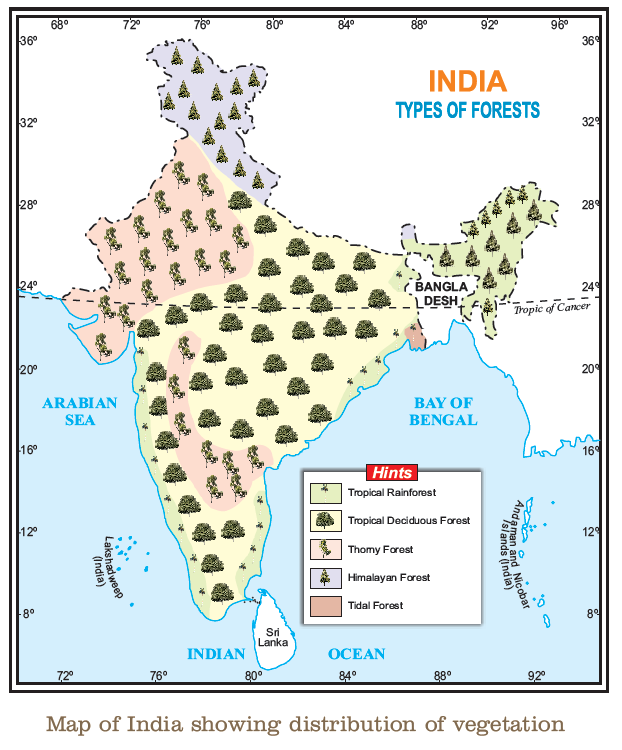 We have varieties of forests. The kind of trees that are found in a forest depend on the soil and climate of that place. Most of them are in the hilly and plateau regions. Broadly, there are five types of forests.
Till a few years ago, we had large areas of land covered with thick forests. These forests were the home for many animals and birds.
Most of these forests have now been cleared either for agriculture or for building houses. The trees in these forests have been cut too, for their wood Because of this deforestation, animals living in them became homeless. Those animals who could not adjust themselves to the new life have become extinct. Today, we find these animals only in the zoos or wildlife sanctuaries, where they are protected.
Now, watch this video:-
1. EVERGREEN FORESTS
In the hot and rainy areas of our country, particularly in the hilly regions, we have forests that remain green throughout the year. These forests are called the Evergreen Forests.
The trees of these forests do not shed all their leaves at one time. The trees are very tall and grow very close to each other. They have broad and thick canopy, so the rays of the sun cannot pass through them to reach the ground.
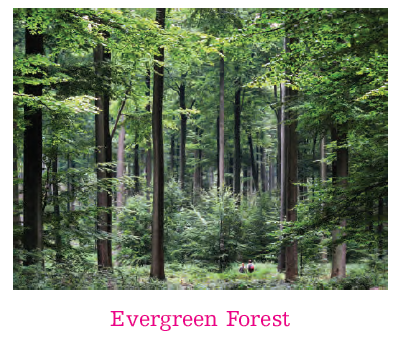
These forests are found along the Western Ghats and the hilly areas of the North-Eastern India. The important trees are ebony, mahogany and rosewood. The wood of these trees is hard and expensive.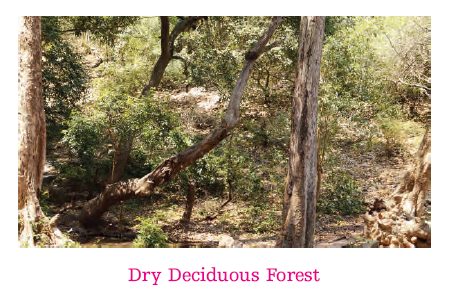
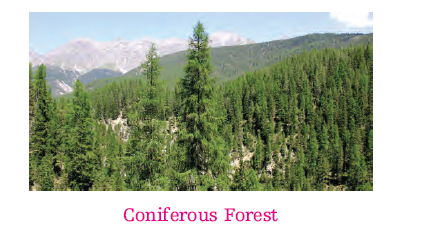
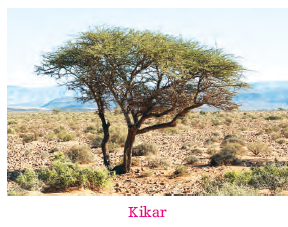
Now, watch this video:-
2. DECIDUOUS FORESTS
These forests are mostly found in the Deccan Plateau and the foothills of the Himalayan mountains. These forests are also called the Monsoon forests. The trees of these forests shed their leaves in the beginning of summer. These forests provide the most important and useful trees such as teak, sal and shisham. This wood is soft and expensive and is used mainly for making furniture and buildings.
Now, watch this video:-
3. CONIFEROUS FORESTS
These forests are found in the slopes of the Himalayas and in the Nilgiri Hills in the South. The trees in these forests are tall and have narrow, needle-shaped leaves. They bear cones and have softwood. The common coniferous trees are pine, deodar, spruce and silver fir.
Now, watch this video:-
4. THORNY FORESTS
These forests lie in Rajasthan and the drier parts of the Southern Plateau. The common trees in these forests are kikar, babul and wild palm. They have long roots and thorns. They can remain without water or rainfall for a long time. A large number of cattle, goats and sheep feed on them.
Now, watch this video:-
Assignments:-
Read Chapter-14 (Page-82-83)
25 / 08 / 2021
Ch- 13 THE SOIL
Assignments:- Do Pages-79-80

1. The soil is the_______ layer of earth.
2. The soil in the western desert is____.
3. The ____ soil is good for growing cotton and sugarcane .
4. Tea and Coffee are grown in ______soil.
5. Manures and _____are added to make the soil fertile.
C. Write 'T' for true and 'F' for false in your S.st OCBs:-
1. Black soil is formed in the northern mountains.
2. The soil in mountain and hill slopes is very thin and poor.
3. Step farming can prevent soil erosion.
4. Rubber is grown in Laterite soil.
5. Soil is formed in a short time.
D. Answer the following questions in your S.st notebook:-
1. What is the most fertile soil in India called? How is it formed ?
2.What type of soil is good for growing cotton? Where is it found?
3. What is Laterite soil? Where is it found in India ?
4.What are cash crops?
5. What is soil erosion? How it is caused?
6. How can we check soil erosion?

24 / 08 / 2021
Ch- 13 THE SOIL
INTRODUCTION
The soil is a great gift of nature to the mankind. Just imagine, without soil, we would have little to eat! A great variety of soil in India makes it possible to grow a vast variety of crops.
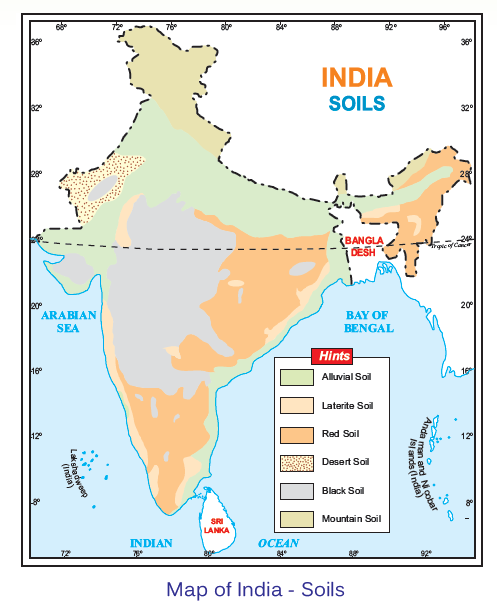 The soil forms the top layer of the earth’s surface. It is formed very slowly through the breaking up of rocks. It is then spread over a wide area by wind and rainfall. The thickness of the soil is not the same at all the places. It varies according to the nature and the colour of soil.
Now, watch this video:-
ALLUVIAL SOIL
Soils vary greatly from place to place. The most fertile soil is found in the Northern Plains. It is called the Alluvial Soil. This type of soil is formedby the deposition of silt brought down from the mountains by the rivers. The crops that grow well in this soil are rice, wheat, jute and sugarcane.
Now, watch this video:-
DESERT SOIL
The soil in the western desert is sandy. Such type of soil is also called the Desert Soil or the sandy soil. It is sandy and saline. In areas where salt content is very high, salt farming is practised. It is obtained by evaporating the water out of soil. Due to the acute shortage of water, nothing much grows here. Wherever water has been made available through irrigation, various crops like gram, millet, wheat, cotton, dates and other fruits can be grown.
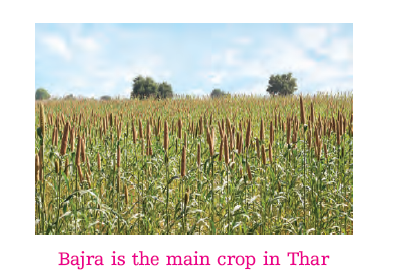
Now, watch this video:-
BLACK SOIL
In the north-western part of the Deccan Plateau, we find the Black Soil. This type of soil is formed from the rocks made by lava. The lava oozes out from the cracks in the earth’s crust, and spreads over a large area.
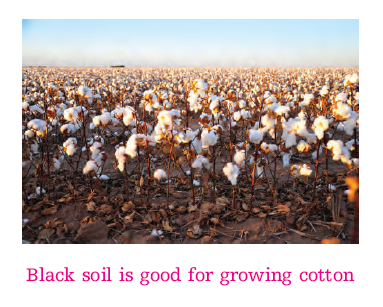 When it cools down, it becomes a rock. The soil made from these rocks is good for growing cotton and sugarcane.
Now, watch this video:-
RED SOIL
In Odisha, Chhattisgarh and south of the Ganges Plains the soil is reddish in colour. This type of soil is not very fertile. The red colour is due to the iron content in the soil. This soil is good for growing groundnut, millet and pulses.
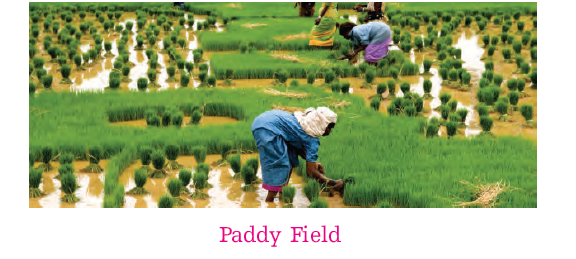 The soil in the Coastal Plains is irrigated by rivers and canals. It is very good for raising rice and sugarcane.
Now, watch this video:-
MOUNTAIN SOIL
The soil on the mountains and hill slopes is very thin and poor. It is coarse and contains gravel with pieces of stones. This type of soil is good for growing fruit trees. The hilly areas generally have orchards or fruit farms.
The hill slopes are generally cut into steps and farmers do terrace farming to grow rice and maize.
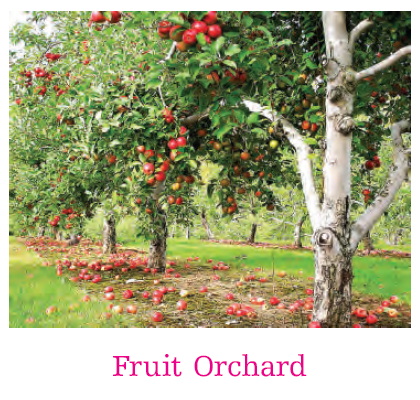
The hill slopes are generally cut into steps and farmers do terrace farming to grow rice and maize.
Now, watch this video:-
LATERITE SOIL
On the hill slopes of the south, crops like tea, coffee, rubber, cashew and pepper are grown in the Laterite soil. These crops are called the cash crops. The country exports these crops to other countries, and earns foreign exchange. The Laterite soil is found in areas with heavy rainfall and high temperature. Large quantity of manure and fertilizers need to be added to this soil to make it fertile.
Laterite soil is used for making bricks for constructing houses.
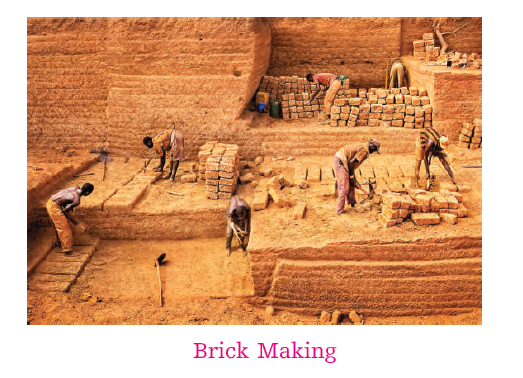 Since we have a large variety of soil, there is hardly any crop which we cannot grow. At places, where the soil is not very fertile, farmers use manures like cow-dung and green manures. They also use fertilizers to increase the farm production.
Soil is a very important natural resource, and we must protect it so that it remains fit for farming. Rain water and strong winds carry away the rich soil from our fields and cause soil erosion. Soil erosion is also caused by deforestation and floods.
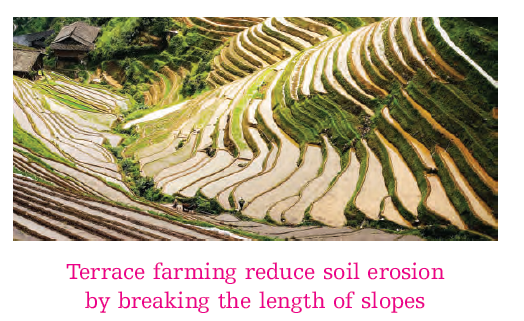 Special efforts have to be made to conserve our soil, and check soil erosion.
To check soil erosion, we must take up the following steps –
1. Planting grass, shrubs and plants. The roots help in binding the soil together.
2. Step farming or Terrace farming.
3. Planting more trees.
Laterite soil is used for making bricks for constructing houses.
Soil is a very important natural resource, and we must protect it so that it remains fit for farming. Rain water and strong winds carry away the rich soil from our fields and cause soil erosion. Soil erosion is also caused by deforestation and floods.
To check soil erosion, we must take up the following steps –
1. Planting grass, shrubs and plants. The roots help in binding the soil together.
2. Step farming or Terrace farming.
3. Planting more trees.
Now, watch this video:-
Assignments:-
Read Chapter-13 (Page-76-78)
Read Chapter-13 (Page-76-78)
11 / 08 / 2021
REVISION
Ch- 5 LIFE IN THE NORTHERN PLAIN
Assignments:-
LEARN AND WRITE ALL THE EXERCISES IN YOUR S.ST OCBs.
A. Tick (√ ) the correct answer
1. The capital of Assam is
a. Dispur b. Chandigarh c. Agartala
2.______ is famous for dance of men in Punjab.
a. Giddha. b. Bihu c. Bhangra
3.______ of Muzaffarpur are famous all over India .
a. Mangoes b. Litches. c. Guavas
4.________ is the most important festival of Bengal.
a. Pongal b. Durga Puja. c. Ganesh Chaturthi
5. _____ is the main festival of Assam.
a. Bihu b.Durga Puja. c.Diwali
B. Write 'T' for true and 'F' for false
1. Kanpur is the capital of Bihar. ______
2. Bengal is in the east of India. ______
3. Delhi is the second largest city in India. ______
4. The Damodar river flows through Jharkhand. ______
5. Punjabis are fond of sweets. ______
C. Answer the following questions
1. Into how many bases in the Northern plain divided?2. What is the main occupation of the people of the Satluj basin? Name some of the crops of this region.
3. Name a few festivals celebrated by the people of the Sutlej basin.
4. What are the states that form the Ganga basin?
5. Name some of the crops that grow in the Ganga basin ?
6. What are the states that form the Brahmaputra basin ?
7. What is sericulture and where is it practised?
D. Fill in the blanks
1. ________ are common sight in the farms of the Satluj basin.
2. The weavers of Uttar Pradesh weave beautiful ________ sarees.
3. Bengalis are especially fond of ________ Sangeet .
4. Assam grows the largest quantity of ________ in India.
5. ________ is the capital of Tripura.
6. Madhubani is the famous art of ________.


10 / 08 / 2021
Ch- 4 THE NORTHERN FERTILE PLAIN
REVISION
Assignments:-
LEARN AND WRITE ALL THE EXERCISES IN YOUR S.ST OCBs.

1. Two crops of the Sutlej basin:- ________ , ________
2. Two crops of the Brahmaputra basin:- ________ , ________.
3. Two crops of the Ganga basin:- ________ , ________.
D. Answer the following questions
1. Name the states which lie in the Northern Fertile Plain.
2. How do rivers make the soil fertile?
3. What is a basin ?
4. Name the three river basins in the Northern Fertile Plain.
5. Name two states in the Satluj basin.
6. Name five important cities in the Ganga basin.
7. Why do the Himalayan rivers have plenty of water throughout the year?
04 / 08 / 2021
Ch- 12 OUR NATURAL RESOURCES

Assignments:- Do Pages: 74-75
EXERCISES

B. Name. Do the exercise in your S.st OCBs:-
1. Two exhaustible resources _______,_______.
2. Two inexhaustible resources _______,_______.
3. Which resource is called black gold_______.
C. Answer the following questions in your S.st notebook:-
1. What are natural resources?
2. Define exhaustible resources.
3. Define inexhaustible resources .
4. Why is soil an important resource?
5. Why are trees called green gold?
6. Why do living things need air?
D. Fill in the blanks in your S.st OCBs:-
1. Petroleum is an ________ resource.
2. Metals are found deep inside the ________.
3. ________is used to generate electricity in thermal power plants .
4. People in villages use wood as ________ for cooking .
5. ________ prevents soil erosion.
03 / 08 / 2021
Ch- 12 OUR NATURAL RESOURCES

INTRODUCTION
Nature has gifted our country with many natural resources like air, water, many types of soils, forests, animals, minerals and so on. These gifts of nature which help us to fulfill our daily needs are called Natural Resources.
Early humans did not know how to use these resources. Over time, they learnt to convert these into useful things to fulfill their needs. Many countries have huge reserves of natural resources. However these countries do no know how to use and develop them. So these countries remain poor as their resources get exhausted. There are two types of natural resources - exhaustible and inexhaustible.
Early humans did not know how to use these resources. Over time, they learnt to convert these into useful things to fulfill their needs. Many countries have huge reserves of natural resources. However these countries do no know how to use and develop them. So these countries remain poor as their resources get exhausted. There are two types of natural resources - exhaustible and inexhaustible.
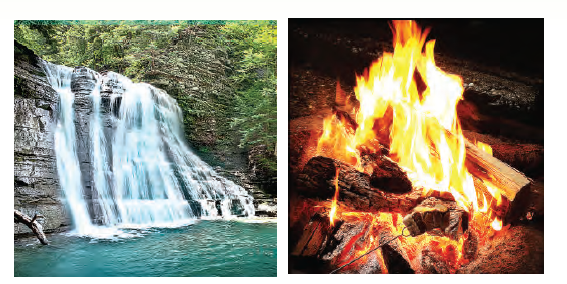
Now, watch this video:-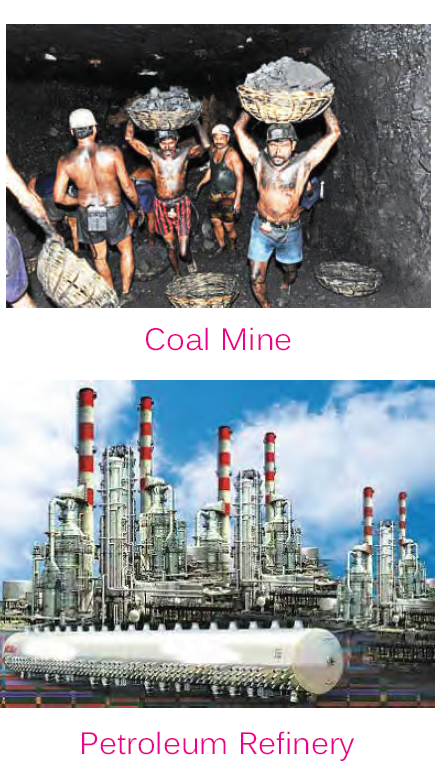
EXHAUSTIBLE RESOURCES
Some resources like metals (iron, copper, etc.) are found deep inside the earth. They are used to make many useful things. These metals are available in limited quantities. Once we use up a particular metal we cannot create any more of it. So these are called exhaustible resources or non-renewable resources.
Coal
Coal is found deep inside the earth. It is important source of power. It is also known as Black Diamond. It is used as a fuel to cook, heat, to generate electricity in thermal power plants. Coal is also used to run steam engines and factories. Our country has large reserves of coal but they will not last more than hundred years.
Coal
Coal is found deep inside the earth. It is important source of power. It is also known as Black Diamond. It is used as a fuel to cook, heat, to generate electricity in thermal power plants. Coal is also used to run steam engines and factories. Our country has large reserves of coal but they will not last more than hundred years.
Petroleum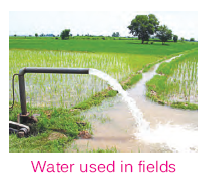
Petroleum is also known as liquid gold. It is refined to produce petrol and diesel. Petrol is refined in petroleum refineries. Petrol and diesel are used in different vehicles like cars, scooters, buses, ships, aeroplanes and trains. The reserves of petroleum are limited. So we use it very wisely.
Now, watch this video:-
INEXHAUSTIBLE RESOURCES
Some natural resources like solar energy, air, wind, soil, water, plants and animals etc. do not get exhausted. They can be renewed. So these are called renewable resources.
Air
It is one of the most important natural resources. We cannot live without air. All living things need air to breathe.
Water
It is also very important natural resources. We need water for drinking, cooking, washing, to grow crops and for many other purposes.
Air
It is one of the most important natural resources. We cannot live without air. All living things need air to breathe.
Water
It is also very important natural resources. We need water for drinking, cooking, washing, to grow crops and for many other purposes.
Plants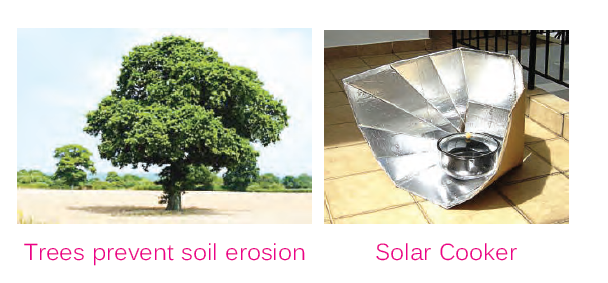
They give us food to eat and oxygen to breathe. Almost all animals depend upon plants for food. Trees prevent soil erosion and provide shelter to animals. They also help to keep the environment pollution free. Plants are useful in many ways. People in villages use wood as a fuel for cooking. Medicines, perfumes, etc. are made from plants. Every part of a plant, i.e. roots, barks, flower, fruit, stem is useful to us. That is why they are called green gold.
Solar Energy
We get solar energy from sun. It is being used extensively for street lighting, in water heaters and in solar cookers. Solar energy is also used to pump water for irrigation and drinking.
Wind
Wind energy is also used to produce electricity. Huge wind mills have been set up at many places in India. Maharashtra, Tamil Nadu, Karnataka, Gujarat, Madhya Pradesh, West Bengal are the leading states where wind mills have been used extensively to produce electricity.
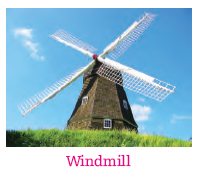
Wind
Wind energy is also used to produce electricity. Huge wind mills have been set up at many places in India. Maharashtra, Tamil Nadu, Karnataka, Gujarat, Madhya Pradesh, West Bengal are the leading states where wind mills have been used extensively to produce electricity.
Soil
It is the top layer of earth's surface in which plants grow. So, soil is an important resource which is used to fulfill our basic needs such as food, clothes and shelter. We should use natural resources wisely so that they last for a long time.
It is the top layer of earth's surface in which plants grow. So, soil is an important resource which is used to fulfill our basic needs such as food, clothes and shelter. We should use natural resources wisely so that they last for a long time.
Now, watch this video:-
Assignments:-
Read Chapter- 12 (Page: 72-73)
28 / 07 / 2021
Ch- 6 THE GREAT INDIAN DESERT
Assignments:- Do Pages: 39-40
EXERCISES

B. Fill in the blanks in your S.st OCBs:-
1. The great Indian desert lies in the state of:_____.
2. A tall tree that grows near an Oasis:______.
3. A city in the Thar Desert:______.
4. People who move from place to place:_____.
5. A festival of Rajasthan:________.
6. Thorny plant in the desert is called a : _____.
C. Write 'T' for true and 'F' for false in your S.st OCBs:-
1. The Great Indian desert lies to the north-west of Northern Plains.
2. The climate is very hot in the desert region.
3. The people of Rajasthan wear bright and colourful clothes .
4. The Indira Gandhi Canal has changed the very face of the desert.
5. There is never a shortage of drinking water in the desert areas.
D. Answer the following questions in your S.st notebook:-
1. What is the desert?
2. What is a sand dune and what makes it move from one place to another?
3. Why are nights generally cold in a desert?
4. What is an Oasis?
5. How has the Indira Gandhi canal change the face of the desert?
6. Why is a camel called the 'ship of the desert'?
7. How can we check the spread of a desert?
E. Write the names of the following in your S.st OCBs:-
1. The Great Indian Desert :
2. The small river that flows in the Great Indian Desert:
3. The crops that grow along the Indira Gandhi Canal :
4. The plants that grow in a desert :
5. The animal is called the 'ship of the desert':
F. Name the following in your S.st OCBs:-
1. Two main handicrafts of Rajasthan:
2. Two main festivals of Rajasthan:
3. Two chief crops of this region:
4. The famous canal in the Indian Desert:
27 / 07 / 2021
Ch- 6 THE GREAT INDIAN DESERT
INTRODUCTION
To the south-west of the Northern Plains, lies a large desert called the Great Indian Desert or the Thar Desert. It is a very hot, dry and sandy area, which has very little vegetation. There is very low rainfall in this desert. The Indian Desert is a part of a very large desert which extends beyond Pakistan into the Arabian desert. The western part of Rajasthan lies in this desert.
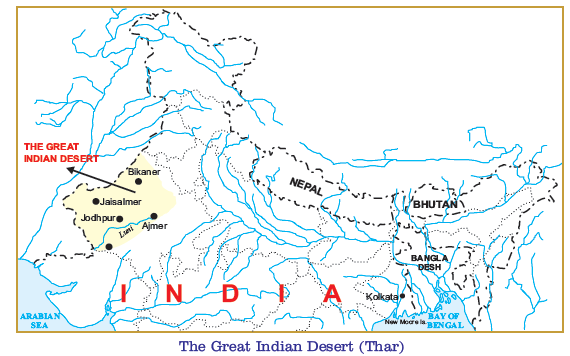 The Great Indian Desert is a sandy plain. At many places, there are small hillocks of sand. These are called the Sand dunes. Dust storms are very common in deserts. They drift the sand from one place to another. Sometimes, these storms blow so strongly that the sand dunes move hundreds of metres away from their actual position.
Now, let's watch the video below to help us understand the topic better:
CLIMATE
The desert has an extreme climate. During summers, the days are very hot. During the day time the sand gets heated quickly and it is very difficult to step out. However, after the sunset, it cools down, making nights invariably very cold.
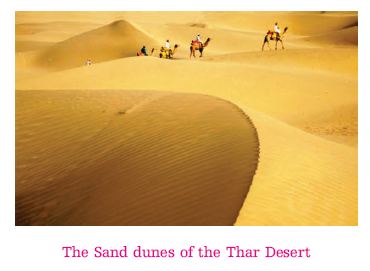 There is very little rainfall in this region. Some parts of the desert do not get rain at all for many years. There are no permanent rivers. In the rainy season, the Luni, which is a small river gets filled up with water, but the water does not last long as it dries up fast.
Now, let's watch the video below to help us understand the topic better:
SCARCITY OF WATER
There is always shortage of drinking water in the desert areas. Because of the scarcity of water, there is hardly any vegetation. Only thorny bushes, shrubs, cactus and keekar grow here.
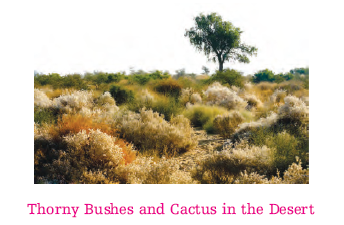 At some places in the desert, the underground water comes to the surface, and forms a big pool. Date palm and other trees grow around it. Such a green and watery spot in the desert is called an oasis.
Many people live near an oasis, and grow crops there. Nowadays, the water of the Sutlej and its tributaries is carried to parts of this desert through the Indira Gandhi Canal. This has changed the very face of the desert. All along the canal, green fields have sprung up. Water from the canal is used to grow crops like wheat, gram, maize,jowar and bajra. Suratgarh, near Ganganagar, has been developed as the largest wheat farm in our country.
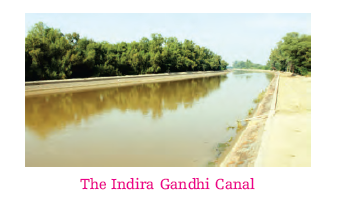 Some of the big cities and towns in the region are Ganganagar, Suratgarh, Jaisalmer, Bikaner, Jodhpur and Barmer.
Jaipur, the capital of Rajasthan is known as the ‘Pink city’.
The Camel is an important animal in the desert. People travel on camels and carts are pulled by them.
 Camels have padded feet which enable them to walk easily on the loose sand. The camel can also go for long distances without food and water. For this reason, it is also called the 'ship of the desert'.
A group of people travelling together on camels form a caravan.
Many people live near an oasis, and grow crops there. Nowadays, the water of the Sutlej and its tributaries is carried to parts of this desert through the Indira Gandhi Canal. This has changed the very face of the desert. All along the canal, green fields have sprung up. Water from the canal is used to grow crops like wheat, gram, maize,jowar and bajra. Suratgarh, near Ganganagar, has been developed as the largest wheat farm in our country.
Jaipur, the capital of Rajasthan is known as the ‘Pink city’.
The Camel is an important animal in the desert. People travel on camels and carts are pulled by them.
A group of people travelling together on camels form a caravan.
Now, let's watch the video below to help us understand the topic better:
LIFE OF PEOPLE IN THE GREAT INDIAN DESERT
Life in a desert is very difficult. Many people in this desert are nomads. They do not have a permanent home. They wander from place to place in search of pasture lands for their animals.
The craftsmen of Rajasthan are expert in making beautiful toys, jewellery and decorative items of brass.
 Gangaur and Teej are the main festivals.
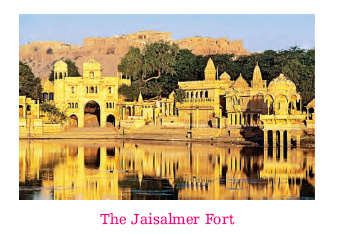 Rajasthan is famous for its beautiful temples, palaces and forts. Thousands of tourists visit Rajasthan to see these places.
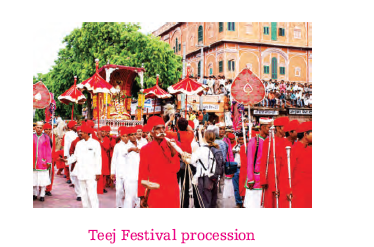 The people of Rajasthan wear bright and colourful clothes. They love singing and dancing.
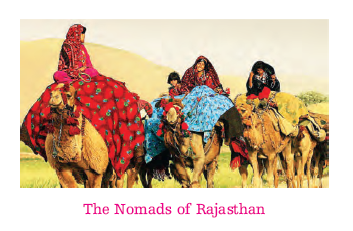
The craftsmen of Rajasthan are expert in making beautiful toys, jewellery and decorative items of brass.
Now, let's watch the video below to help us understand the topic better:
Assignment:-
Read Chapter- 6 (Page-36-38)
20 / 07 / 2021
Ch- 5 LIFE IN THE NORTHERN PLAIN
The teacher will help students understand the chapter and explain the exercises given below:
Assignments:- Do Pages: 33-35
EXERCISES
A. Tick (√ ) the correct answer in your S.st OCBs:-
1. The capital of Assam is ________
a. Dispur b. Chandigarh c. Agartala
2. ________ is a famous dance of men in Punjab.
a. Giddha. b. Bihu c. Bhangra
3. ________ of Muzaffarpur are famous all over India .
a. Mangoes b. Litches. c. Guavas
4. ________ is the most important festival of Bengal.
a. Pongal b. Durga Puja. c. Ganesh Chaturthi
5. ________ is the main festival of Assam.
a. Bihu b. Durga Puja. c. Diwali
B. Write 'T' for true and 'F' for false in your S.st OCBs:-
1. Kanpur is the capital of Bihar. _______
2. Bengal is in the east of India. _______
3. Delhi is the second largest city in India. _______
4. The Damodar river flows through Jharkhand. _______
5. Punjabis are fond of sweets. _______
C. Answer the following questions in your S.st notebook:-
1. Into how many basins in the Northern plain divided?2. What is the main occupation of the people of the Satluj basin? Name some of the crops of this region.
3. Name a few festivals celebrated by the people of the Sutlej basin.
4. What are the states that form the Ganga basin?
5. Name some of the crops that grow in the Ganga basin ?
6. What are the states that form the Brahmaputra basin ?
7. What is sericulture and where is it practised?
D. Fill in the blanks in your S.st OCBs:-
1. _________ are common sights in the farms of the Satluj basin.
2. The weavers of Uttar Pradesh weave beautiful _________ sarees.
3. Bengalis are especially fond of _________ Sangeet .
4. Assam grows the largest quantity of _________ in India.
5. _________ is the capital of Tripura.
6. Madhubani is the famous art of _________.
14 / 07 / 2021
Ch- 5 LIFE IN THE NORTHERN PLAIN
BIHAR
Bihar lies in the east of Ganga Basin. Patna is the capital of Bihar. It is the land of two great religious teachers Buddha and Mahavira. The major crops grown in the state are paddy, wheat, maize, sugarcane and jute.
Litchies of Muzaffarpur are famous all over India. Hindi, Bhojpuri, Maithili and Urdu are widely spoken. Diwali, Dussehra, Chhat, Eid and Teej are the main festivals of Bihar. Bihar is famous for its Madhubani folk art.
Now, watch this video:-
JHARKHAND
Jharkhand is a new state, created out of Bihar. Its capital is Ranchi. The Damodar river flows through it. Dhanbad, Jharia and Bokaro are the important towns of Jharkhand. Jharkhand is very rich in minerals like iron, coal and bauxite.
Now, watch this video:-
WEST BENGAL
West Bengal is in the east of India. The Ganga and the Brahmaputra have made the plains of West Bengal very fertile.
The capital of West Bengal is Kolkata. The hot and wet climate of West Bengal is suitable for rice and jute. West Bengal has many jute factories.
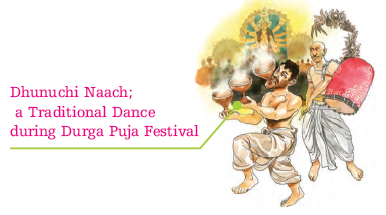 Bengal is famous for its Tangail sarees.Craftsmen in Bengal make wooden toys and jute bags. Men wear dhoti-kurta while women wear sarees.
Bengalis are very fond of fine arts, music, dance, drama and literature. They are specially fond of Rabindra Sangeet. Rice and fish are the favourite food of the Bengali people. Bengali sweets are famous all over India. Durga Puja is the most important and popular festival.
The capital of West Bengal is Kolkata. The hot and wet climate of West Bengal is suitable for rice and jute. West Bengal has many jute factories.
Bengalis are very fond of fine arts, music, dance, drama and literature. They are specially fond of Rabindra Sangeet. Rice and fish are the favourite food of the Bengali people. Bengali sweets are famous all over India. Durga Puja is the most important and popular festival.
Now, watch this video:-
ASSAM
Assam lies in the Brahmaputra Basin. It is the largest state in the north-east. The capital of Assam is Dispur. Guwahati is the largest city. The people of state speak Assamese. It grows the largest quantity of Tea in India. People of Assam practise sericulture, or rearing silkworms. They weave beautiful silk sarees. Bihu is the main festival of Assam. Bihu dance is well known in Assam.
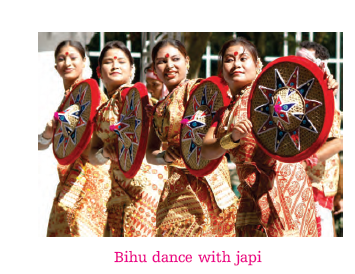
Now, watch this video:-
TRIPURA
Tripura is surrounded by Bangladesh on three sides. The capital of Tripura is Agartala. People here speak Bengali. The tribal people live in its surrounding hills. They make a variety of beautiful things from bamboo.
Now, watch this video:-
Assignments:-
Read Chapter- 5 (Page- 32 & 33)
13 / 07 / 2021
Ch- 5 LIFE IN THE NORTHERN PLAIN
PUNJAB
Punjab lies in the Sutlej Basin. The Sutlej, Beas and Ravi rivers flow through Punjab. The main occupation of people of this state is farming. Tractors ploughing the land and sowing seeds are a common sight here. Farmers use scientific methods of farming. Wheat, rice and sugarcane are the main crops. Chandigarh is the capital of Punjab. It is a well-planned city. Punjabi and Hindi are the main languages spoken.
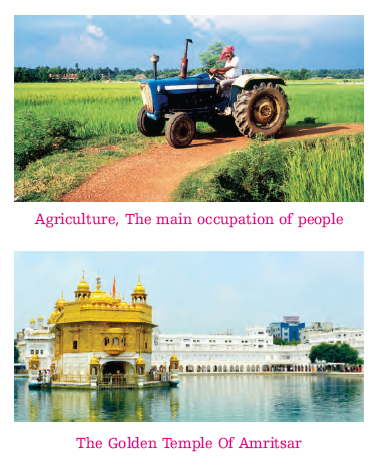 Many industries have been set up in Punjab. Ludhiana is famous for its hosiery and woollen goods.
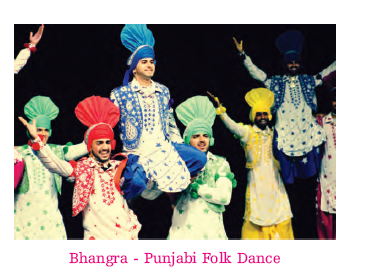 Jalandhar is famous for its sports goods. Amritsar and Dhariwal have mills that make woollen products. The important tourist places in the state are the Golden Temple and Jallianwala Bagh of Amitsar.
 Gurupurav, Baisakhi, Holi, Lohri, Diwali and Dussehra are the main festivals of Punjab. Bhangra, a group dance of the menfolk of Punjab, and Giddha, a group dance of the womenfolk are the popular dances. The women wear salwar, kurta, kameez and dupatta, while men wear kurta with lungi or payjama and turban (pagri). The people of Punjab are fond of Makki ki roti, Sarson ka saag and Lassi.
Now, watch this video:-
HARYANA
Haryana also lies in the Sutlej Basin. It is towards the south of Punjab. Chandigarh is the capital of Haryana. The Yamuna and the Sutlej rivers provide water for irrigation. Farming and dairy farming are the main occupations of the people. The state is known for its breed of cows and buffaloes. The major crops grown here are wheat, rice, maize, jowar, bajra, pulses, and sugarcane. Haryanvi and Hindi are the main languages spoken in Haryana.
Faridabad is an important Industrial town of Haryana. Gurgaon is famous for its automobile manufacturing industry. Panipat is famous for its handloom industry. The women in Haryana wear ghagra-kurta and the men wear dhoti-kurta.
Now, watch this video:-
UTTAR PRADESH
Uttar Pradesh lies in the Ganga Basin. Lucknow is the capital of Uttar Pradesh. Both the rivers Ganga and Yamuna, pass through this state and make the land very fertile. Uttar Pradesh grows the largest quantity of sugarcane. Wheat and rice are also grown here. Fruits like mangoes and guavas grow here in plenty. The weavers of Uttar Pradesh weave beautiful Bananasi sarees. Other important cities of Uttar Pradesh are Varanasi, Allahabad, Kanpur, Meerut, Mathura and Agra. Kanpur is the most important industrial city of Uttar Pradesh.
he famous tourist places in Uttar Pradesh are Taj Mahal, Fathepur Sikri, Akbar’s tomb and temples of Mathura and Varanasi.
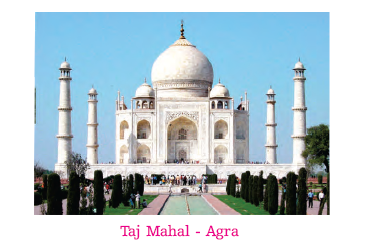 People in Uttar Pradesh speak Hindi and Urdu. The main festivals celebrated here are Holi, Dussehra, Diwali, Eid and Christmas. The traditional dress is saree for women and kurta-payjama for men.
he famous tourist places in Uttar Pradesh are Taj Mahal, Fathepur Sikri, Akbar’s tomb and temples of Mathura and Varanasi.
Now, watch this video:-
DELHI
Delhi, the capital of India, is towards the south-east of Haryana. It is the third largest city in India. Delhi has many monuments like The Red Fort, Qutub Minar, India Gate, Bahai Temple, Birla Mandir, Lotus Temple, Gurudwara Sisganj, Akshardham Temple etc. which attract tourists from all over the world.
Now, watch this video:-
Assignments:-
Read Chapter- 5 (Page- 30 & 31)
07 / 07 / 2021
Ch- 4 THE NORTHERN FERTILE PLAIN
Assignments:- Do pages- 28-29
EXERCISES
1. Two crops of the Sutlej basin:-_____ , _____
2. Two crops of the Brahmaputra basin:- _______ , ________.
3. Two crops of the Ganga basin:- _______ , ________.
D. Answer the following questions in your S.st notebook:-
1.Name the states which lie in the Northern Fertile Plain.
2. How do rivers make the soil fertile?
3.What is a basin ?
4.Name the three river basins in the Northern Fertile Plain.
5.Name two states in the Satluj basin.
6.Name five important cities in the Ganga basin.
7. Why do the Himalayan rivers have plenty of water throughout the year?
06 / 07 / 2021
Ch- 4 THE NORTHERN FERTILE PLAIN
INTRODUCTION
To the south of the Himalayas, there lies a huge plain, called the Northern Fertile Plain. This great plain stretches from Punjab in the west to Assam in the east.
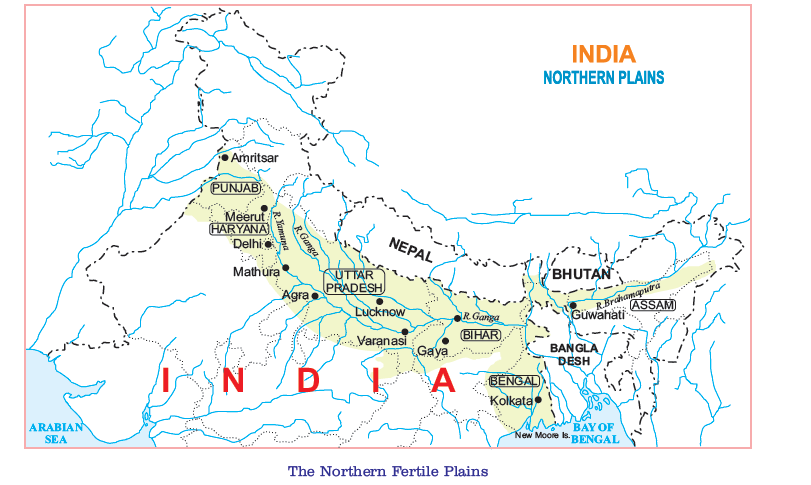 It is one of the largest and the most fertile plains of the world. The Northern Fertile Plain is about 2,400 kilometres long. The states of Punjab, Haryana, Uttar Pradesh, Bihar, Jharkhand, West Bengal and parts of Assam lie in this plain.
Rivers which originate from the snow-covered mountains flow through this plain. These rivers are perennial rivers. They have water in them throughout the year. When they flow down the mountains, they carry large quantities of rocks and sand, called sediments with them. During the rainy season, when the rivers get flooded, the sediments spread on the banks of the rivers. This fine fertile soil, called the alluvium, improves the fertility of the soil.
The rivers, Sutlej, Ganga, Brahmaputra and their tributaries, which flow through the Northern Fertile Plain, divide this plain into three river basins. A basin is a region drained by a river and its tributaries.
Rivers which originate from the snow-covered mountains flow through this plain. These rivers are perennial rivers. They have water in them throughout the year. When they flow down the mountains, they carry large quantities of rocks and sand, called sediments with them. During the rainy season, when the rivers get flooded, the sediments spread on the banks of the rivers. This fine fertile soil, called the alluvium, improves the fertility of the soil.
The rivers, Sutlej, Ganga, Brahmaputra and their tributaries, which flow through the Northern Fertile Plain, divide this plain into three river basins. A basin is a region drained by a river and its tributaries.
Now, watch this video to help you understand better:-
THE THREE RIVER BASIN
1. The Sutlej Basin
2. The Ganga Basin
3. The Brahmaputra Basin
1. The Sutlej Basin
The western part of the Northern Fertile Plain, around the river, Sutlej, is called the Sutlej basin. This basin is watered by the river Sutlej and its tributary, the Beas. A tributary is a small river which joins a large river. Two important states in this plain are Punjab and Haryana. This area does not get much rainfall. The farmers here depend mostly on rivers, canals and tube wells for irrigation. Wheat is the main crop of this basin.
The Bhakra Nangal Dam, built on the Sutlej river, is one of the largest dams of India. This dam provides water for irrigation, and produces hydroelectricity.
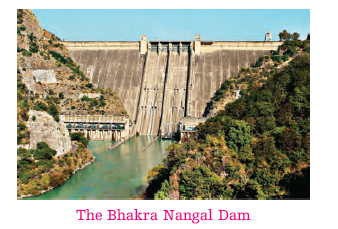
2. The Ganga Basin
The Ganga basin lies to the east of the Sutlej basin. Delhi, Uttar Pradesh, Bihar, Jharkhand and West Bengal lie in this basin. The Ganga, the Yamuna and their tributaries like the Ghaghara, the Gandak and the Kosi flow through this basin.
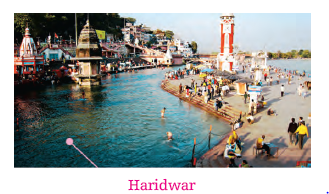 The Ganga is the most important river of India. The Ganga originates from Gangotri which is a glacier in the Himalayas.
The Ganga is a sacred river. Lakhs of pilgrims visit Haridwar every year to take a dip in the holy Ganga River.
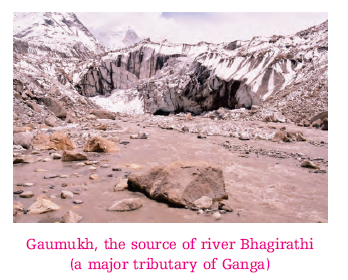 The Bhagirathi, the Mandakini and the Alaknanda are the small rivers which join the Ganga, while it flows down the mountains. By the time it reaches the plains at Haridwar, it becomes fairly big in size.
The river Yamuna originates from another glacier in the Himalayas, called the Yamunotri. It joins the Ganga at Allahabad. The place where they meet is called the Sangam. The rivers flowing through the Deccan Plateau, such as the Chambal, Betwa and Ken join the river Yamuna.
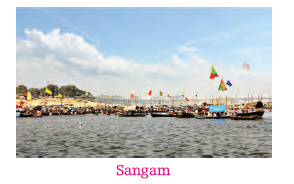 The famous Kumbh Mela is held at Allahabad/Haridwar about once in every twelve years.
When the Ganga reaches West Bengal, it splits into two main branches. One of its branches, the Hugli, flows through the city of Kolkata.
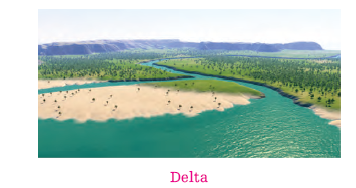 The other branch, Padma, flows through Bangladesh, before it enters the sea. On reaching West Bengal, the river slows down, and its ability to carry sediments reduces. It starts depositing the sediments, it is carrying. Because of this, small islands of sand are formed in the water. These triangular pieces of land are called the Deltas.
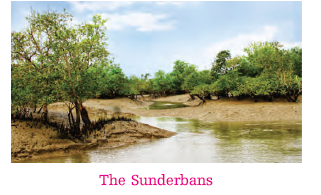 These islands divide the river into many streams, called the distributaries. The Delta of the Ganga and the Brahmaputra, known as the Sunderbans, is the largest in the world.
Crops : The Ganga basin gets a lot of rain. The soil of this basin is very rich and fertile. The main crops of this region are rice, sugarcane, wheat and jute. Since this area produces a large quantity of food crops, the Ganga basin is often called the food bowl of India.
Towns and Cities : All along the banks of the rivers in this basin, there are old and well-known cities like Rishikesh, Haridwar, Delhi, Agra, Kanpur, Allahabad, Ayodhya, Patna, Varanasi and Kolkata.
3. The Brahmaputra Basin
This basin lies in Assam. Guwahati is an important city in this basin. The river, Brahmaputra rises in Tibet, where it is called the Tsangpo and enters India from the east. It flows through a narrow valley in Assam. Then it flows south-west towards the sea. It enters Bangladesh, and joins with a branch of the Ganga.
There is very heavy rainfall in this basin every year. It makes the river overflow its anks. Though the floods cause a lot of damage, they also make the soil very fertile.
 Chief Crops: The main crops of this region are rice and jute. Tea is grown on the hill slopes. India is famous throughout the world for its tea.
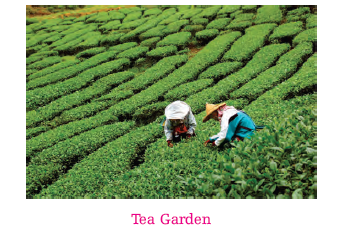 The Northern Fertile Plain is one of the most thickly populated areas of the world.
2. The Ganga Basin
3. The Brahmaputra Basin
1. The Sutlej Basin
The western part of the Northern Fertile Plain, around the river, Sutlej, is called the Sutlej basin. This basin is watered by the river Sutlej and its tributary, the Beas. A tributary is a small river which joins a large river. Two important states in this plain are Punjab and Haryana. This area does not get much rainfall. The farmers here depend mostly on rivers, canals and tube wells for irrigation. Wheat is the main crop of this basin.
The Bhakra Nangal Dam, built on the Sutlej river, is one of the largest dams of India. This dam provides water for irrigation, and produces hydroelectricity.
Some big cities of this basin are Chandigarh, Amritsar, Ludhiana, Jalandhar, Patiala and Ambala.
2. The Ganga Basin
The Ganga basin lies to the east of the Sutlej basin. Delhi, Uttar Pradesh, Bihar, Jharkhand and West Bengal lie in this basin. The Ganga, the Yamuna and their tributaries like the Ghaghara, the Gandak and the Kosi flow through this basin.
The Ganga is a sacred river. Lakhs of pilgrims visit Haridwar every year to take a dip in the holy Ganga River.
The river Yamuna originates from another glacier in the Himalayas, called the Yamunotri. It joins the Ganga at Allahabad. The place where they meet is called the Sangam. The rivers flowing through the Deccan Plateau, such as the Chambal, Betwa and Ken join the river Yamuna.
When the Ganga reaches West Bengal, it splits into two main branches. One of its branches, the Hugli, flows through the city of Kolkata.
Crops : The Ganga basin gets a lot of rain. The soil of this basin is very rich and fertile. The main crops of this region are rice, sugarcane, wheat and jute. Since this area produces a large quantity of food crops, the Ganga basin is often called the food bowl of India.
Towns and Cities : All along the banks of the rivers in this basin, there are old and well-known cities like Rishikesh, Haridwar, Delhi, Agra, Kanpur, Allahabad, Ayodhya, Patna, Varanasi and Kolkata.
3. The Brahmaputra Basin
This basin lies in Assam. Guwahati is an important city in this basin. The river, Brahmaputra rises in Tibet, where it is called the Tsangpo and enters India from the east. It flows through a narrow valley in Assam. Then it flows south-west towards the sea. It enters Bangladesh, and joins with a branch of the Ganga.
There is very heavy rainfall in this basin every year. It makes the river overflow its anks. Though the floods cause a lot of damage, they also make the soil very fertile.
Now, watch this video to help you understand better:-
Assignments:-
Read Chapter- 4 (Page- 24 to 27)
Read Chapter- 4 (Page- 24 to 27)
~~~~~~~~~~~~~~~~~~~~~~~~~~~~~~~~~~~~~~~~~~~~~~

16 / 06 / 2021
REVISION
Ch- 3 LIFE IN THE HIMALAYAN REGION
Assignments:-
LEARN AND WRITE ALL THE EXERCISES IN YOUR S.ST OCBs.
Page-22
EXERCISES
A. Answer the following questions:-
1. Name the fruits grown in Kashmir and Himachal Pradesh.
2. Which states are known as the 'Seven Sisters' ?
3. How do the Buddhist celebrate the festival of 'Saga Dawa' ?
B. Name the place which is famous for:-
1. Houseboats
2. Kesar (saffron)
3. Tea Gardens
4. Oranges and pineapples
5. Cane furniture
C. Name the folk dances of:-
1. Kashmir
2. Himachal Pradesh
3. Mizoram
D. Fill in the blanks:-
1. The Mughal Emperor Jahangir called Kashmir the______
2. In Srinagar , boats called_____ are used as hotels for tourists.
3. Darjeeling is famous for its _____gardens.
4. In hilly areas, people rear________ and _________for their wool and meat.
5. The seven states of the Eastern hilly region are called as _________.
6. The tribal people in the hills wear jewellery made from ______horns and ivory.
7._______are famous for their fine texture and embroidery.
15 / 06 / 2021
REVISION
Ch- 2 THE HIMALAYAN REGION
Assignments:-
LEARN AND WRITE ALL THE EXERCISES IN YOUR S.ST OCBs.
Page:15-16
EXERCISES
A. Tick (√ ) the correct answer:-
1. K2 lies in the ..................... .... range.
(a) Shiwalik. (b) Karakoram (c) Aravalli
2. Bachendri Pal was the first ....................... woman to reach the top of the Mount Everest.
(a) Indian (b) Nepalese (c) British
3. Some of the beautiful hill stations of India lie in the________
(a) Greater Himalayas. (b)Lesser Himalayas. (c)Lower Himalayas
4. The foothills of the Himalayas are called the_____
(a) Terai (b) Himachal (c) Nepal
B. Answer the following questions:-
1.What does the word 'Himalaya' mean ?
2. Name some important peaks of the Himalayas.
3. Name the four zones into which the Himalayan ranges are divided.
4. What is a glacier ?
5. What is terrace farming ?
6. what is a pass ? Name three famous passes in the Himalayas.
7. What is a wildlife sanctuary ?
8. How are the Himalayas useful to us ? (Any four uses)
C. Name the following:-
1. The highest peak in the world :
2. The highest peak in India :
3. Two hill stations in the Himachal range :
4. The highest range of the Himalayas :
5. The first mountaineers to climb the Mount Everest :
D. In the space provided against the given terms below, write whether the following are peaks, hill stations or rivers:-
1. Manali_____________
2. Sutlej_____________
3. Makalu____________
4. Darjeeling_________
5. K2_________________
6. Nainital____________
E. Fill in the blanks:-
1. The ................... ranges remain covered with snow throughout the year.
2. The foothills of the Shiwalik are called............
3. The Ganga starts from ................. glacier.
4. Srinagar lies in the .............. Himalayas.
5. .......................... are natural or man-made passages in the mountain region.
09 / 06 / 2021
Ch- 1 OUR COUNTRY INDIA
REVISION
Assignments:-
LEARN AND WRITE ALL THE EXERCISES IN YOUR S.ST OCBs.
Page- 9
EXERCISES

B. Answer the following questions.
1. Which part of India is Peninsula ?
2. Which sea lies to the east of India?
3. Which part of India is shaped like a Crown?
4. What are the important physical features according to which our country is divided into five physical divisions ?
5. Name the neighbouring countries of India.
C. Fill in the blanks.
[ north-west , 2900km, Indian, seventh]
1. India is the________ largest country in the world.
2. The ________ocean is named after India.
3. The distance between east and west corner of India is________.
4. Pakistan is to the of India.
D. Write 'T' for True and 'F' for False.
1. Bangladesh is a state of India.
2. The Himalayas are situated in the north of India.
3. India is the second largest country in the world .
4. The Great Indian Desert is also called the Thar Desert.
08 / 06 / 2021
Ch- 3 LIFE IN THE HIMALAYAN REGION
Assignments:-
Page-22
EXERCISES
A. Answer the following questions in your S.st note book:-
1. Name the fruits grown in Kashmir and Himachal Pradesh.
2. Which states are known as the 'Seven Sisters' ?
3. How do the Buddhist celebrate the festival of 'Saga Dawa' ?
B. Name the place which is famous for. Do this exercise in your Sst OCBs:-
1. Houseboats
2. Kesar (saffron)
3. Tea Gardens
4. Oranges and pineapples
5. Cane furniture
C. Name the folk dances of. Do this exercise in your Sst OCBs:-
1. Kashmir
2. Himachal Pradesh
3. Mizoram
D. Fill in the blanks in your Sst OCBs:-
1. The Mughal Emperor Jahangir called Kashmir the______
2. In Srinagar , boats called_____ are used as hotels for tourists.
3. Darjeeling is famous for its _____gardens.
4. In hilly areas, people rear________ and _________for their wool and meat.
5. The seven states of the Eastern hilly region are called as _________.
6. The tribal people in the hills wear jewellery made from ______horns and ivory .
7._________are famous for their fine texture and embroidery.
02 / 06 / 2021
Ch- 3 LIFE IN THE HIMALAYAN REGION
WEST BENGAL AND SIKKIM
Darjeeling, located in the hills in West Bengal is famous for its tea gardens. They produce one of the finest qualities of tea. Sikkim is a very small state. It has high mountains and deep river valleys. Kanchenjunga, the third highest peak in the Himalayas, lies in Sikkim.
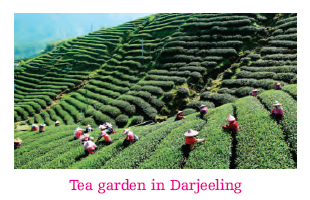
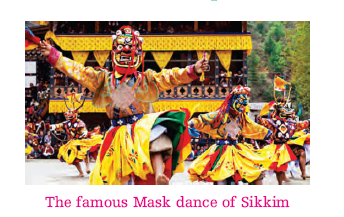
NORTH-EASTERN STATES
North-eastern part of India has seven states. These are Arunachal Pradesh, Assam, Meghalaya, Nagaland, Manipur, Tripura and Mizoram. These states are also known as the Seven Sisters.
Assam is the largest state in the North-East region. The capital of Assam is Dispur. Assam is famous for its silk. A large number of tribes live here.
The people of Nagaland are called the Nagas. They are very brave people.
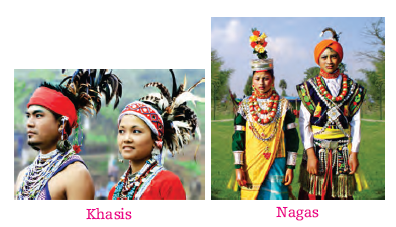 The Garos and the Khasis are theinhabitants of Meghalaya. They wear bright colourful clothes and jewellery made from shells, horns and ivory. Each tribe has its own style of costumes and dances.
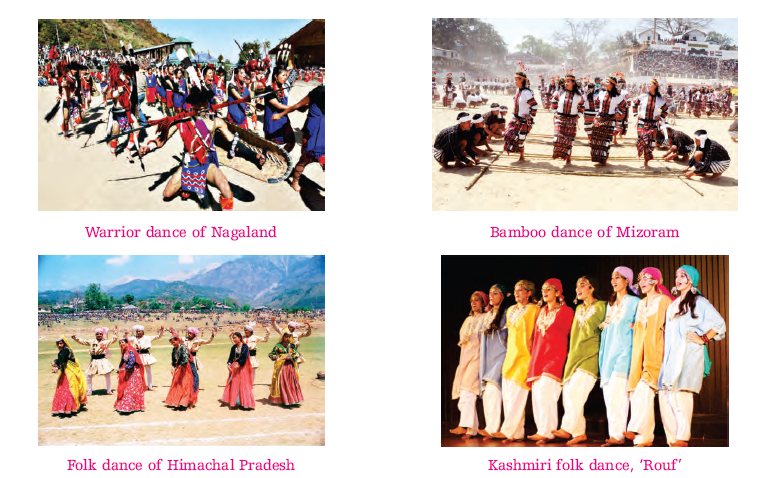 The people of hilly areas are fond of singing and dancing. The Kashmiri folk dance is called the ‘Rouf’. The folk dance of Himachal Pradesh is called ‘Natti’. The bamboo dance of Mizoram and the warrior dance of the Nagas are also very famous.
All the North-Eastern states are famous for their bamboo items. Arunachal Pradesh is known for its cane furniture.
Assam is the largest state in the North-East region. The capital of Assam is Dispur. Assam is famous for its silk. A large number of tribes live here.
The people of Nagaland are called the Nagas. They are very brave people.
All the North-Eastern states are famous for their bamboo items. Arunachal Pradesh is known for its cane furniture.
Assignments:-
Read Chapter-3 (Page- 20 to 21)
Read Chapter-3 (Page- 20 to 21)
01 / 06 / 2021
Ch- 3 LIFE IN THE HIMALAYAN REGION
INTRODUCTION
The Himalayan Region includes the states of :
Jammu and Kashmir, Himachal Pradesh, Uttarakhand, Northern Uttar Pradesh, Northern West Bengal, Sikkim and North-Eastern states of Tripura, Assam, Arunachal Pradesh, Meghalaya, Mizoram, Nagaland and Manipur.
Life in the mountains is not easy. People mostly live in valleys. Their houses are made of wood and have sloping roofs.
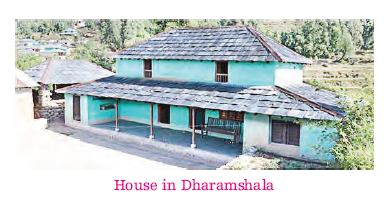
Jammu and Kashmir, Himachal Pradesh, Uttarakhand, Northern Uttar Pradesh, Northern West Bengal, Sikkim and North-Eastern states of Tripura, Assam, Arunachal Pradesh, Meghalaya, Mizoram, Nagaland and Manipur.
Life in the mountains is not easy. People mostly live in valleys. Their houses are made of wood and have sloping roofs.
Now, watch this video to help you understand better:-
JAMMU AND KASHMIR
The Kashmir Valley is very beautiful. The Mughal emperor, Jahangir, described it as the Heaven on Earth. Its natural beauty attracts tourists from all over the world. The state has two capitals, Srinagar in summer and Jammu in winter. In the Dal lake at Srinagar, boats, called Houseboats, are used as hotels for tourists. They also have shikaras or boats selling flowers and vegetables. The main occupation of the people is farming. People do terrace farming.
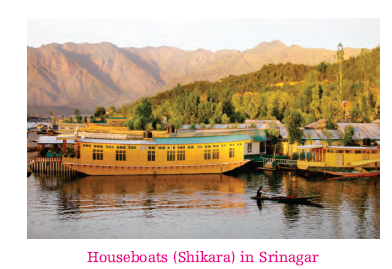 Fields are cut like steps on the slopes of hills. Rice, maize, millet and sugarcane are grown here. In Jammu and Kashmir, farmers grow Kesar (saffron), which is used for flavouring and colouring foods. Vegetables including potatoes are also grown here in plenty.
People in Kashmir valley stay at home during winter as it is very cold. They make very beautiful articles from wood, brass and silver etc. The carpets and pashmina shawls of Kashmir are world famous.
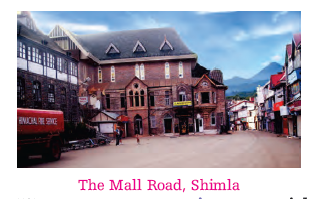 Winters are quite cold in Srinagar. The people keep Kangris, small pots with burning coal, to keep themselves warm. Men and women generally wear phiran and salwar. The main festivals celebrated here are Eid nd Shivratri. People drink Kahwa, a special type of tea.
The people speak Kashmiri, Ladakhi, Dogri and Urdu.
Srinagar, Gulmarg, Pahalgam, the Temple of Vaishno Devi and the Amaranth caves are the famous tourist places of Jammu and Kashmir.
People in Kashmir valley stay at home during winter as it is very cold. They make very beautiful articles from wood, brass and silver etc. The carpets and pashmina shawls of Kashmir are world famous.
The people speak Kashmiri, Ladakhi, Dogri and Urdu.
Srinagar, Gulmarg, Pahalgam, the Temple of Vaishno Devi and the Amaranth caves are the famous tourist places of Jammu and Kashmir.
Now, watch this video to help you understand better:-
HIMACHAL PRADESH
The lifestyle of people of Himachal Pradesh is almost the same as that of Kashmir. Shimla is the capital of Himachal Pradesh. The main occupation of people is farming. They grow rice, maize, barley, fruits and vegetables. Many people rear sheep and goats. Plums and apples are grown in large quantities and supplied to the other parts of the country. Woollen carpets, blankets, rugs, and shawls are woven here. Thousands of tourists visit famous hill stations of Kullu, Manali, Shimla and Dalhousie.
Women wear pyjamas with a long top. They wear scarves called dhazu. The men wear tight pyjamas with loose shirt.
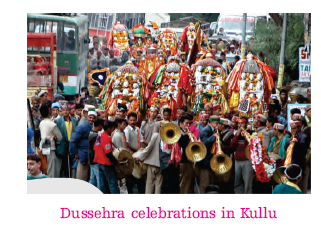 Dussehra is the main festival in Kullu region. Most people speak Pahari, Hindi, Punjabi and Kinnauri.
Now, watch this video to help you understand better:-
UTTARAKHAND
It is a newly formed state. The capital of Uttarakhand is Dehradun. The main occupation of the people is agriculture. Many people also join army. Dehradun is also known for the Indian Military Academy. Mussorie, Nainital and Ranikhet are popular hill stations. Haridwar, Kedarnath, Badrinath, Gangotri, and Yamunotri are famous tourist places.
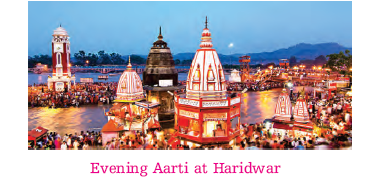
Now, watch this video to help you understand better:-
Assignments:-
Read Chapter-3 (Page- 18 to 19)
Read Chapter-3 (Page- 18 to 19)
25 / 05 / 2021
Ch- 2 THE HIMALAYAN REGION
Assignments:-
Page-15-16
EXERCISES
A. Tick (√ ) the correct answer in your S.st OCBs :-
1. K2 lies in the ..................... .... range.
(a) Shiwalik. (b) Karakoram (c) Aravalli
2. Bachendri Pal was the first ....................... woman to reach the top of the Mount Everest.
(a) Indian (b) Nepalese (c) British
3. Some of the beautiful hill stations of India lie in the________
(a) Greater Himalayas.
(b)Lesser Himalayas.
(c)Lower Himalayas
4. The foothills of the Himalayas are called the_____
(a) Terai (b) Himachal (c) Nepal
B. Answer the following questions in your S.st note book:-
1.What does the word 'Himalaya' mean ?
2. Name some important peaks of the Himalayas.
3. Name the four zones into which the Himalayan ranges are divided.
4. What is a glacier ?
5. What is terrace farming ?
6. what is a pass ? Name three famous passes in the Himalayas.
7. What is a wildlife sanctuary ?
8. How are the Himalayas useful to us ? (Any four uses)
C. Name the following. Do the exercise in your S.st OCBs.
1. The highest peak in the world :
2. The highest peak in India :
3. Two hill stations in the Himachal range :
4. The highest range of the Himalayas :
5. The first mountaineers to climb the Mount Everest :
D. In the space provided against the given terms below, write whether the following are peaks, hill stations or rivers. Do the exercise in your S.st OCBs.
1. Manali_____________
2. Sutlej_____________
3. Makalu____________
4. Darjeeling_________
5. K2_________________
6. Nainital____________
E. Fill in the blanks in your S.st OCBs :-
1. The ................... ranges remain covered with snow throughout the year.
2. The foothills of the Shiwalik are called............
3. The Ganga starts from ................. glacier.
4. Srinagar lies in the .............. Himalayas.
5. .......................... are natural or man-made passages in the mountain region.
18 / 05 / 2021
Ch- 2 THE HIMALAYAN REGION
INTRODUCTION
The Himalayas lie in the northern part of India. The Himalayan mountains stretch over a distance of about 2,500 kilometres in a long curve from Jammu and Kashmir in the west to Arunachal Pradesh in the east.
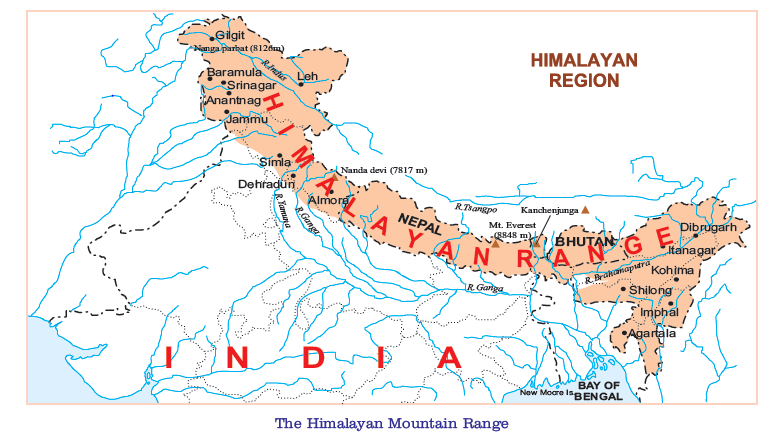 The Himalayan mountain range is like a huge wall along the northern boundary of India. It forms a natural border between India and China. Nepal and Bhutan are the two countries which lie completely in the Himalayan region. In the North-East, it runs southwards and forms a barrier between India and Myanmar (Burma). Here the mountain ranges are not very high, and are called the Purvanchal. The hills in this area such as the Garo hills, the Khasi hills, the Naga hills and the Mizo hills are not very high.
Karakoram Mountains lie in the north-west of the Himalayas, beyond river Indus. These are the northern parts of Kashmir. K2 or Mt. Godwin Austin, the highest mountain peak in India, lies in the Karakoram Mountains. It is 8,611 meters high. It is the second highest peak in the world.
The word, Himalaya is derived from two Sanskrit words ’Him’ and ‘Alaya’. ‘Him’ means snow; and ‘Alaya’ means the abode, i.e., the abode of snow’. Most of its peaks remain covered with snow throughout the year. The Himalayas are famous all over the world for their beautiful snow-covered peaks. The Himalayan mountain ranges can be divided into four zones :
1. The Himadri, or the Greater Himalayas in the extreme north of the Himalayas.
2. The Himachal or the Lesser Himalayas to the south of Himadri.
3. The Shiwalik or the Lower Himalayas
4. The Terai or the Marshy Land of Uttar Pradesh.
Karakoram Mountains lie in the north-west of the Himalayas, beyond river Indus. These are the northern parts of Kashmir. K2 or Mt. Godwin Austin, the highest mountain peak in India, lies in the Karakoram Mountains. It is 8,611 meters high. It is the second highest peak in the world.
The word, Himalaya is derived from two Sanskrit words ’Him’ and ‘Alaya’. ‘Him’ means snow; and ‘Alaya’ means the abode, i.e., the abode of snow’. Most of its peaks remain covered with snow throughout the year. The Himalayas are famous all over the world for their beautiful snow-covered peaks. The Himalayan mountain ranges can be divided into four zones :
1. The Himadri, or the Greater Himalayas in the extreme north of the Himalayas.
2. The Himachal or the Lesser Himalayas to the south of Himadri.
3. The Shiwalik or the Lower Himalayas
4. The Terai or the Marshy Land of Uttar Pradesh.
Now, watch this video to help you understand better:-
PEAKS IN HIMALAYAS
The Himalayas are the highest mountain ranges in the world. Mount Everest in the Himalayas is the highest peak (about 8,848 metres) in the world. It is situated in Nepal.
Other important peaks in the Himalayas are the Kanchenjunga (8,598 metres), Nanda Devi (7,817 metres), Dhaulagiri (8,172 metres), Nanga Parbat, Makalu and Annapurna.
People from all over the world come here for mountaineering Tenzing Norgay of India and Edmund Hillary of New Zealand were the first men to climb the Mount Everest in 1953. In 1984, Bachendri Pal, a college lecturer,was the first Indian woman to climb the Mount Everest.
1. The Himadri
The Greater Himalayas or the Himadri is like a great wall along the northern border of India. The highest peaks in the world that remain covered with snow throughout the year lie in this range. The Kanchenjunga and the Annapurna are two very high peaks in these ranges.
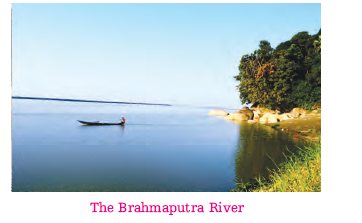 In some areas of this range, the snow keeps moving down slowly. This moving mass of ice is called a glacier. Most of the rivers of North India, such as the Indus, the Sutlej, the Ganga, the Yamuna and the Brahmaputra originate from these glaciers. The Ganga starts from Gangotri glacier and the Yamuna starts from the Yamunotri glacier. During summer, the snow on the mountains melts,and helps the rivers to flow throughout the year. Nothing grows in this region
2. The Himachal Or The Lesser Himalayas
This range lies to the south of the Himadri. This is lower in height but has regular snowfall during the winter season. Some of India’s most beautiful hill stations like Srinagar, Gulmarg, Pahalgam, Shimla, Nainital, Manali, Darjeeling, Dalhousie, Almora, etc. are located in this range.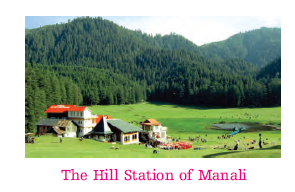 The rivers form waterfalls as they flow down the mountains. The slopes of this region are covered with valuable forests of pine, chir and deodar.
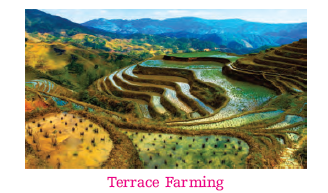 Fruits like apples, plums, peaches, apricots, pears and cherries grow here in large quantities. Terrace farming is done on mountain slopes. The slopes are cut to make large, flat steps by the farmers. Potatoes are also grown here.
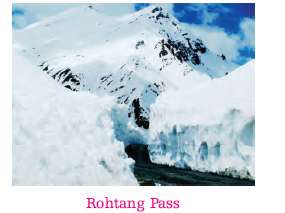 These areas have some narrow passages, called the Passes, through which people can cross the mountain ranges. Passes are natural or man-made passages in the mountain region. In Jammu and Kashmir, the Banihal Pass, Bomdi La Pass, the Rohtang Pass and the Shipki La Pass in Himachal Pradesh along with the Nathu La Pass in Sikkim are some important passes.
3. The Shiwalik Or The Lower Himalayas
This range lies at the base of the Himalayas. It has only low-lying hills. This area receives very heavy rainfall. People here practice Terrace farming. They also grow fruits like apples, plums and pears.
 The hill slopes are covered with thick forests having wild animals such as tigers, leopards, bears, sambhar and crocodiles.
4. The Terai
The foothills of the Shiwalik are called the Terai. Most of this region lies in Uttarakhand and Uttar Pradesh. It receives a very heavy rainfall.
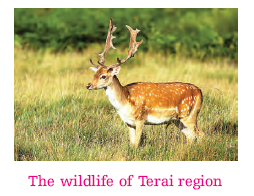 A large part of this area was once a marshy land and had thick forests. Now the forests have been cut and the land is being used for cultivation. This region has many national parks and wildlife sanctuaries. The Jim Corbett National Park in Uttarakhand is famous for its wildlife.
Other important peaks in the Himalayas are the Kanchenjunga (8,598 metres), Nanda Devi (7,817 metres), Dhaulagiri (8,172 metres), Nanga Parbat, Makalu and Annapurna.
People from all over the world come here for mountaineering Tenzing Norgay of India and Edmund Hillary of New Zealand were the first men to climb the Mount Everest in 1953. In 1984, Bachendri Pal, a college lecturer,was the first Indian woman to climb the Mount Everest.
1. The Himadri
The Greater Himalayas or the Himadri is like a great wall along the northern border of India. The highest peaks in the world that remain covered with snow throughout the year lie in this range. The Kanchenjunga and the Annapurna are two very high peaks in these ranges.
2. The Himachal Or The Lesser Himalayas
This range lies to the south of the Himadri. This is lower in height but has regular snowfall during the winter season. Some of India’s most beautiful hill stations like Srinagar, Gulmarg, Pahalgam, Shimla, Nainital, Manali, Darjeeling, Dalhousie, Almora, etc. are located in this range.
3. The Shiwalik Or The Lower Himalayas
This range lies at the base of the Himalayas. It has only low-lying hills. This area receives very heavy rainfall. People here practice Terrace farming. They also grow fruits like apples, plums and pears.
4. The Terai
The foothills of the Shiwalik are called the Terai. Most of this region lies in Uttarakhand and Uttar Pradesh. It receives a very heavy rainfall.
Now, watch this video to help you understand better:-
IMPORTANCE OF HIMALAYAS
The Himalayan mountains are of great importance for the following reasons :
- The Himalayas form a natural wall along the northern border of India and guard us against the enemies.
- Rain-bearing monsoon clouds strike against the Himalayas, causing rains in this area.
- They protect us from the cold winds coming from the north.
- The rivers coming from the Himalayas carry the fertile soil from the mountains to the plains.
- The forests provide us with valuable wood and herbs.
- These forests are a natural home for many wild animals.
- They have many hill stations, which are visited by many tourists, every year.
- The Himalayas form a natural wall along the northern border of India and guard us against the enemies.
- Rain-bearing monsoon clouds strike against the Himalayas, causing rains in this area.
- They protect us from the cold winds coming from the north.
- The rivers coming from the Himalayas carry the fertile soil from the mountains to the plains.
- The forests provide us with valuable wood and herbs.
- These forests are a natural home for many wild animals.
- They have many hill stations, which are visited by many tourists, every year.
Now, watch this video to help you understand better:-
Assignment:-
Read Chapter-2 (Page- 11 to 14)
11 / 05 / 2021
Ch- 1 OUR COUNTRY INDIA
Assignments:-
Page-9
EXERCISES
B. Answer the following questions in your S.st note book:-
1. Which part of India is Peninsula ?
2. Which sea lies to the east of India?
3. Which part of India is shaped like a Crown?
4. What are the important physical features according to which our country is divided into five physical divisions ?
5. Name the neighbouring countries of India.
C. Fill in the blanks in your S.st OCBs :-
[ north-west , 2900km, Indian, seventh]
1. India is the________ largest country in the world.
2. The ________ocean is named after India.
3. The distance between east and west corner of India is________.
4. Pakistan is to the of India.
D. Write 'T' for True and 'F' for False in your S.st OCBs :-
1. Bangladesh is a state of India.
2. The Himalayas are situated in the north of India.
3. India is the second largest country in the world .
4. The Great Indian Desert is also called the Thar Desert.
04 / 05 / 2021
Ch- 1 OUR COUNTRY INDIA
Page- 6
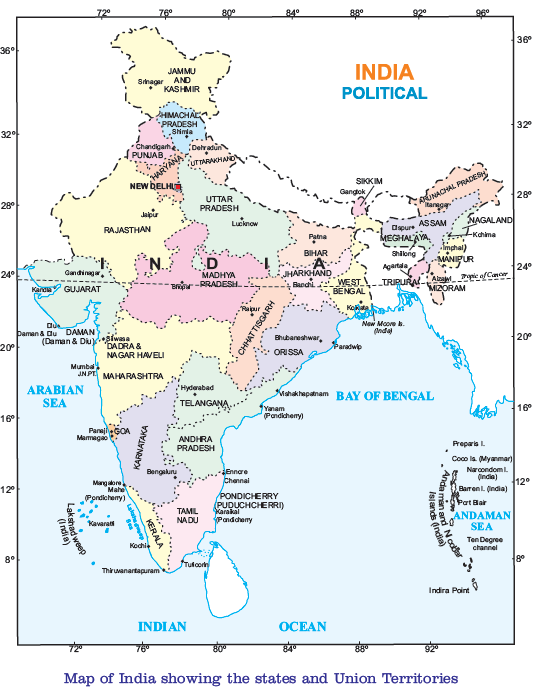 \
\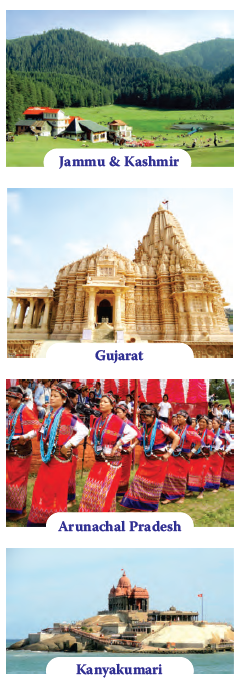
INTRODUCTION
Our country, India is the seventh largest country in the world. Its length from Jammu and Kashmir in the north to Kanyakumari or Kanniyakumari in the south is about 3,200 km. Its breadth from Gujarat in the west to Arunachal Pradesh in the east is around 2,900 km.\The Himalayan mountains in the north of India is shaped like a crown. The width of India decreases as we move towards the south. The Tropic of Cancer passes through the middle of India.
Page 7
The southern part of India is a peninsula and is shaped like a cone. It is surrounded by the Bay of Bengal along the east coast, the Arabian Sea along the west coast and the Indian Ocean in the south. The southernmost tip of the mainland India is Kanyakumari. The southernmost tip of the country is the Indira Point in the Andaman and Nicobar Islands.
NEIGHBOURING COUNTRIES OF INDIA
The southern part of India is a peninsula and is shaped like a cone. It is surrounded by the Bay of Bengal along the east coast, the Arabian Sea along the west coast and the Indian Ocean in the south. The southernmost tip of the mainland India is Kanyakumari. The southernmost tip of the country is the Indira Point in the Andaman and Nicobar Islands.
NEIGHBOURING COUNTRIES OF INDIA
India is located in the Southern Asia. The neighbours of India include :
- Afghanistan and Pakistan in north-west.
- China, Bhutan and Nepal in the north.
- Myanmar and Bangladesh in the east.
- Sri Lanka and Maldives in the south.
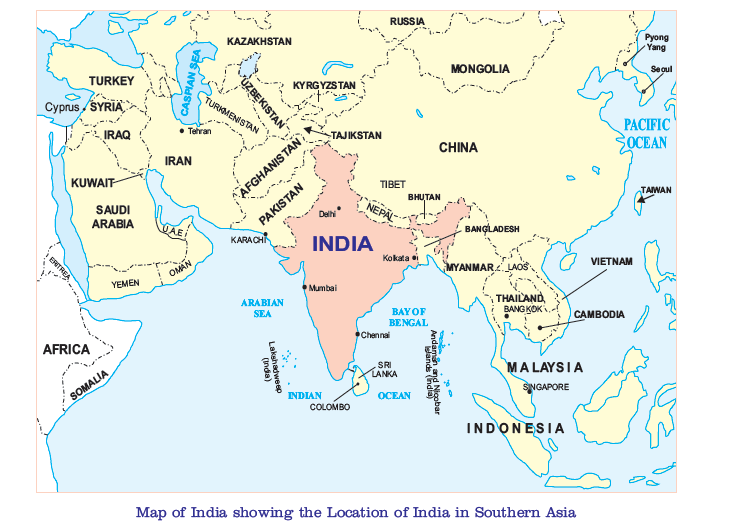 India is a land of mountains, plateaus, plains, deserts and islands. They form the physical features of India.
The physical divisions of our country are as under :
The Northern Mountains or the Himalayan Region.
The Northern Plains. The Great Indian Desert or The Thar Desert.
- Afghanistan and Pakistan in north-west.
- China, Bhutan and Nepal in the north.
- Myanmar and Bangladesh in the east.
- Sri Lanka and Maldives in the south.
The physical divisions of our country are as under :
The Northern Mountains or the Himalayan Region.
The Northern Plains. The Great Indian Desert or The Thar Desert.
Page 8
- The Southern Plateaus.
- The Coastal Plains.
- The Islands (The Andaman and Nicobar and The Lakshadweep).
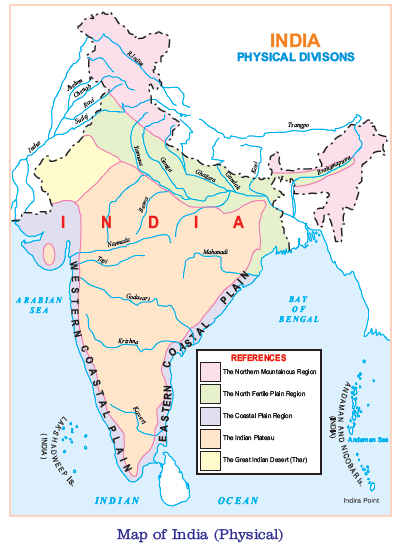
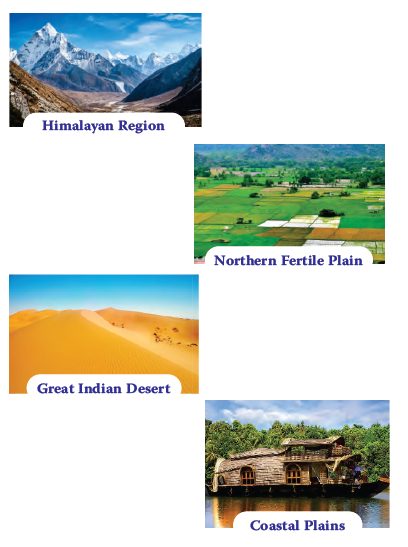
- The Coastal Plains.
- The Islands (The Andaman and Nicobar and The Lakshadweep).
Assignments:-
Read Chapter-1 (Page- 6 to 8)
Read Chapter-1 (Page- 6 to 8)


